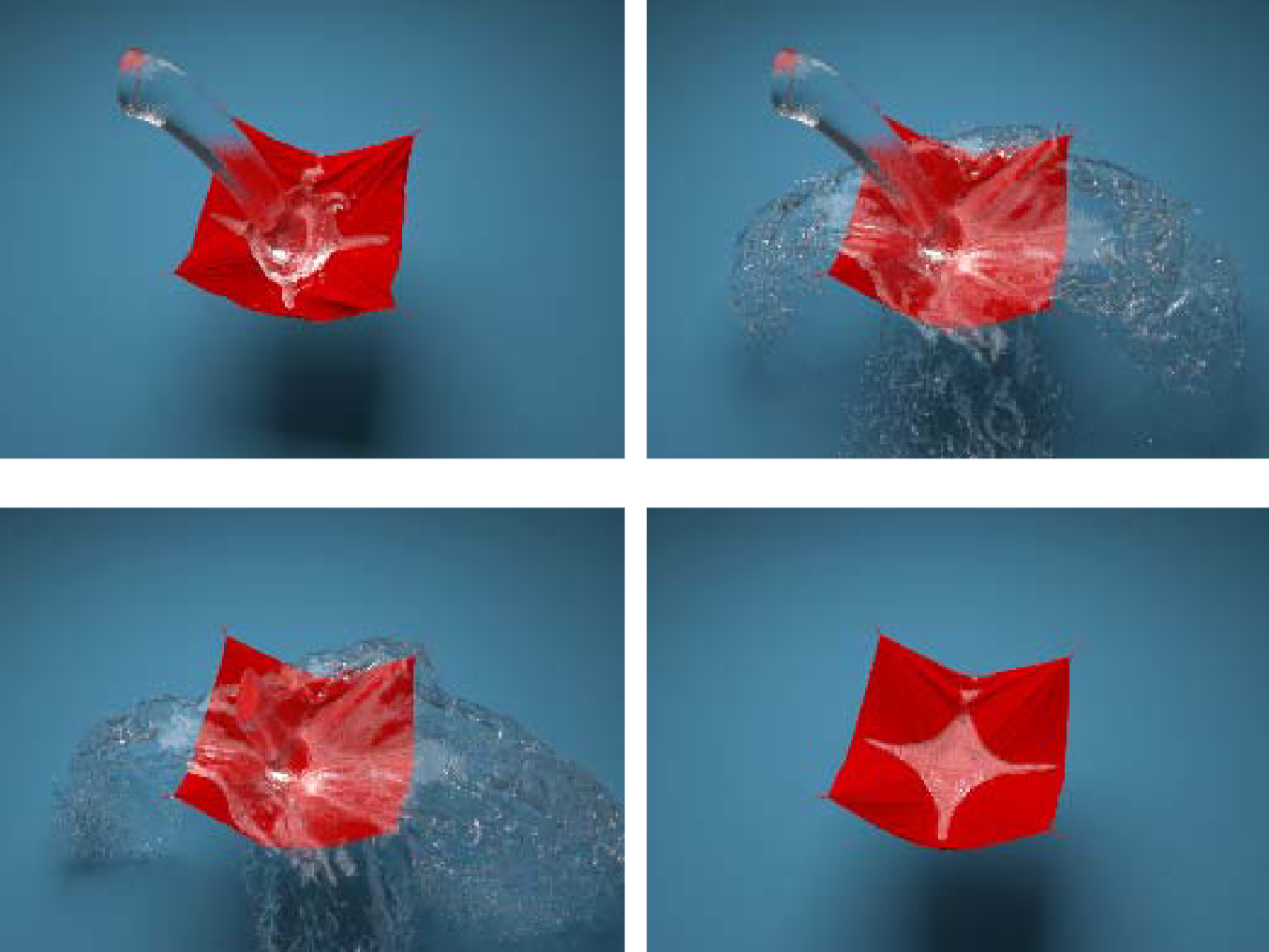
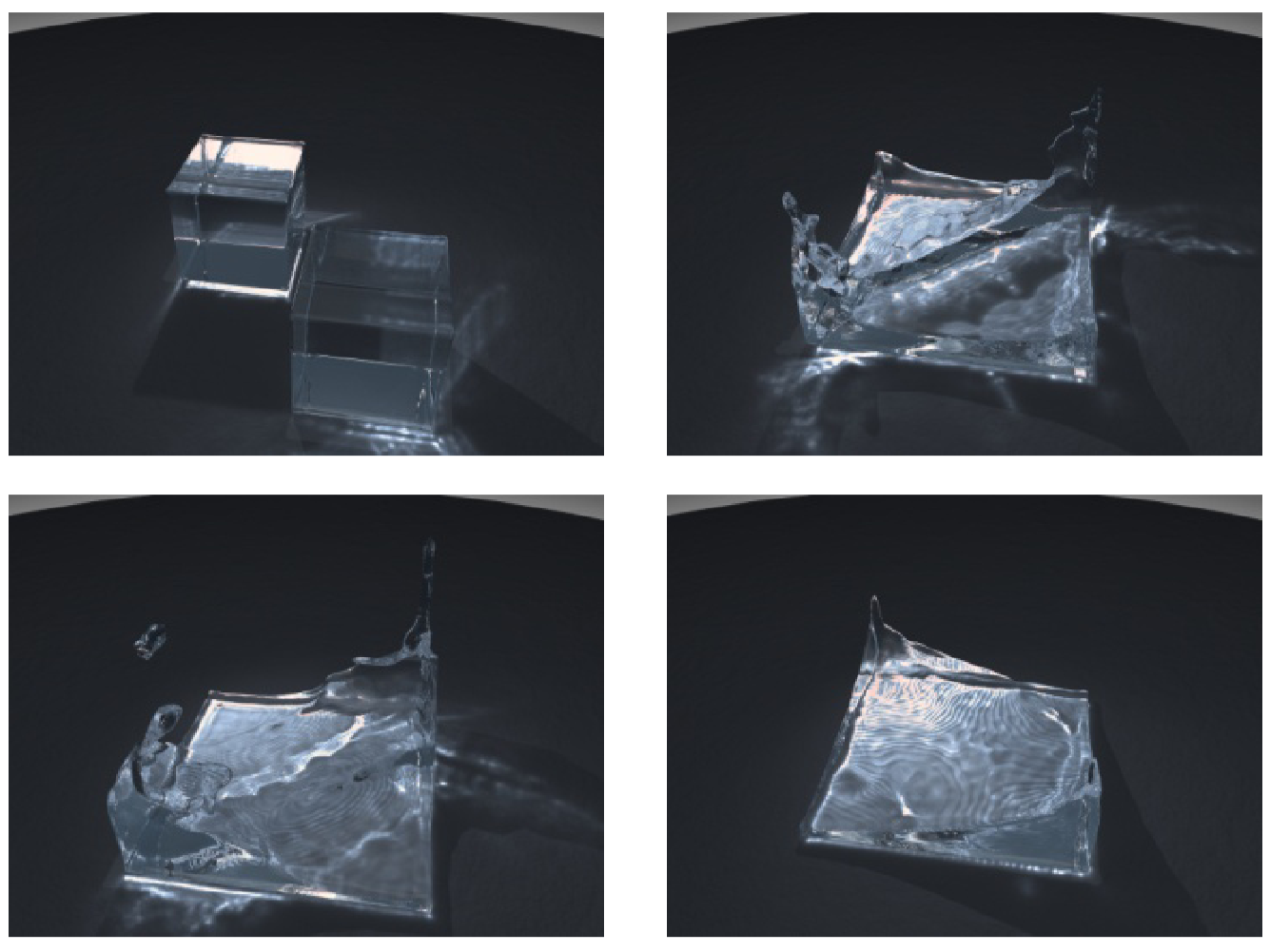
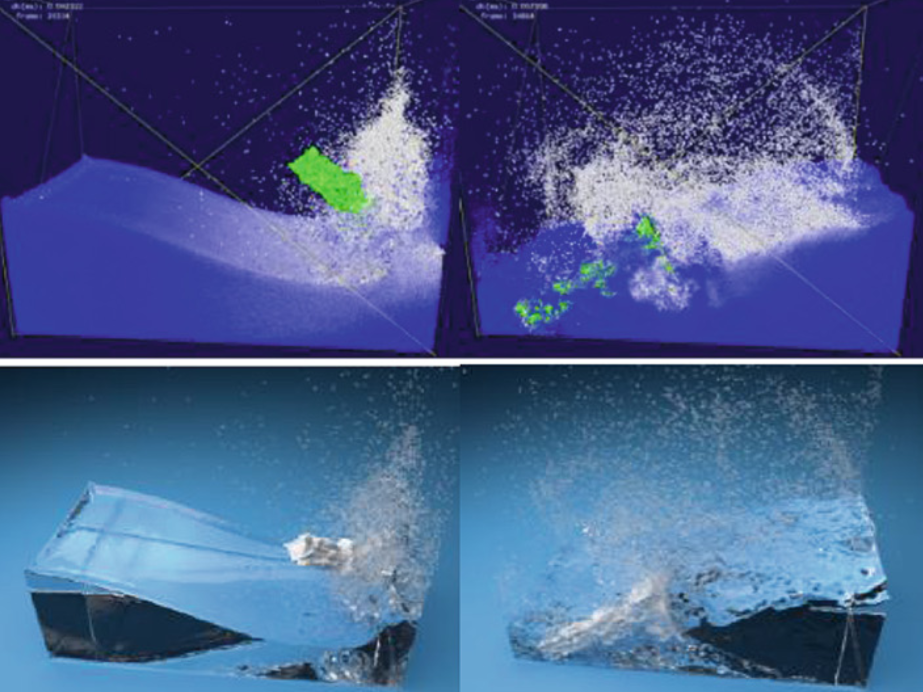
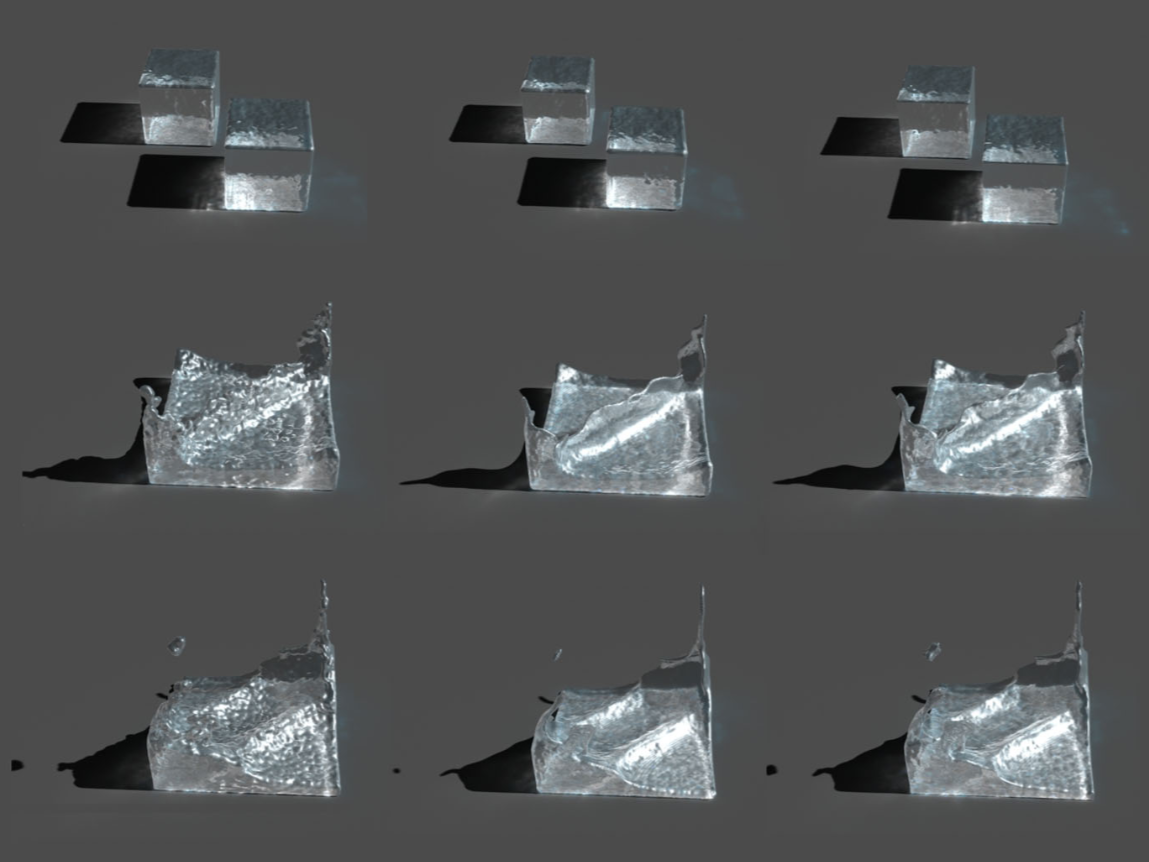
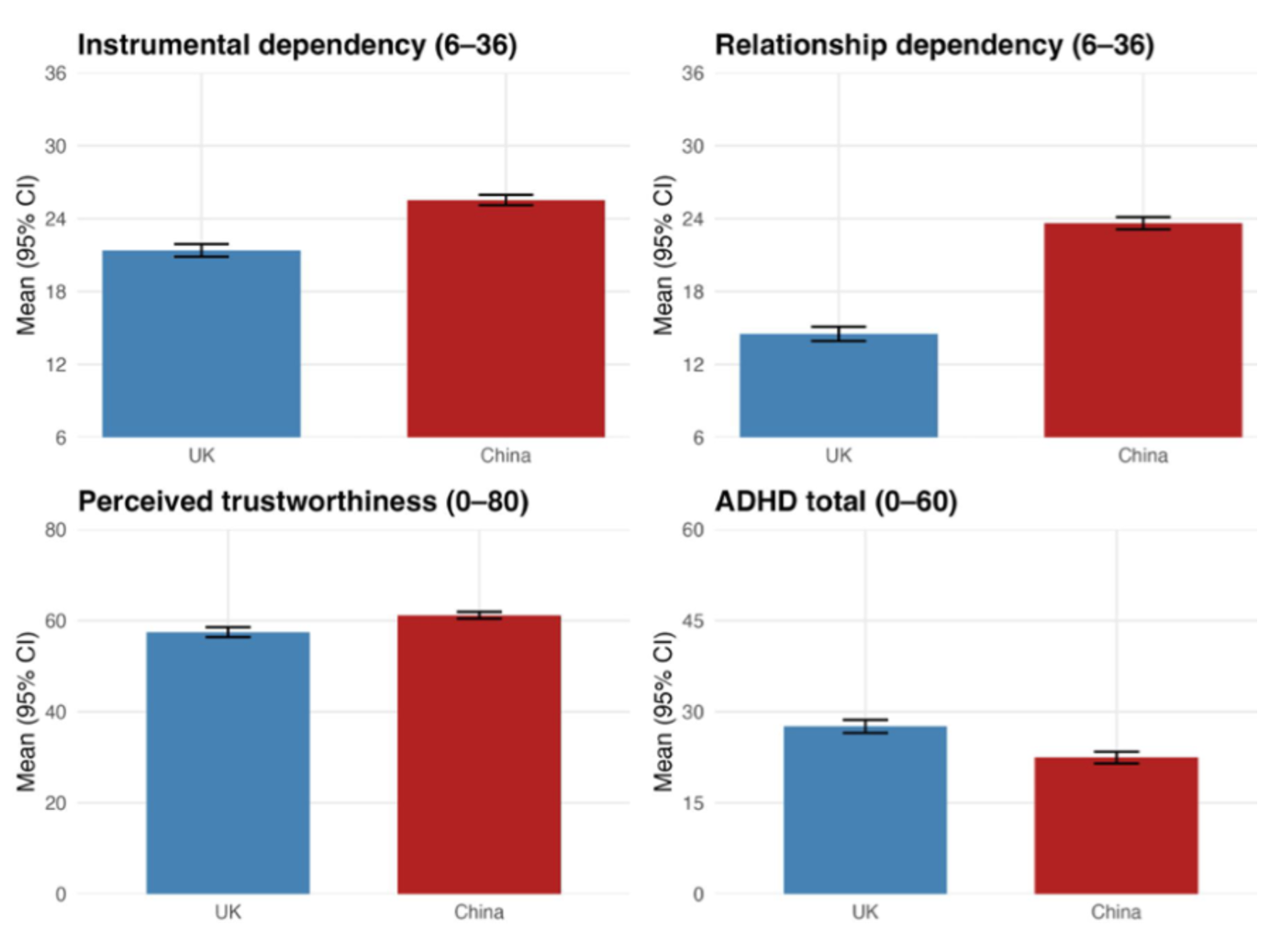
Large language models (LLMs) create contexts in which individual differences may shape reliance on digital systems. Drawing on neurodiversity, this study examined whether perceived trustworthiness of user’s primary LLM mediates associations between attention-deficit/hyperactivity disorder (ADHD) traits and LMM dependencyinstrumental and relationship LLM dependency. Adults in the UK (n = 567) and China (n = 577) reported ADHD traits, perceived LLM trustworthiness of LLM, and both types of dependency. Across samples, higher ADHD traits were associated with lower trustworthiness, whereas greater trustworthiness was associated with greater instrumental and relationship dependency, yielding negative indirect effects. In the UK, direct ADHD-dependency associations were non-significant after controlling for trust, and mediation produces a significant negative total effect for relationship dependency. In China, negative indirect effect coexisted with positive direct associations, creating opposing pathways whose total effects depends on their relative magnitude. Implications for inclusive LLM design without unintendend dependency and supporting neurodiverse users are discussed
PGSR-DR: High-Fidelity Reflective Surface Reconstruction with Planar-Based Gaussians and Deferred Rendering
Jingfeng Li, Xiaokun Wang, Haokai Zeng, and 5 more authors
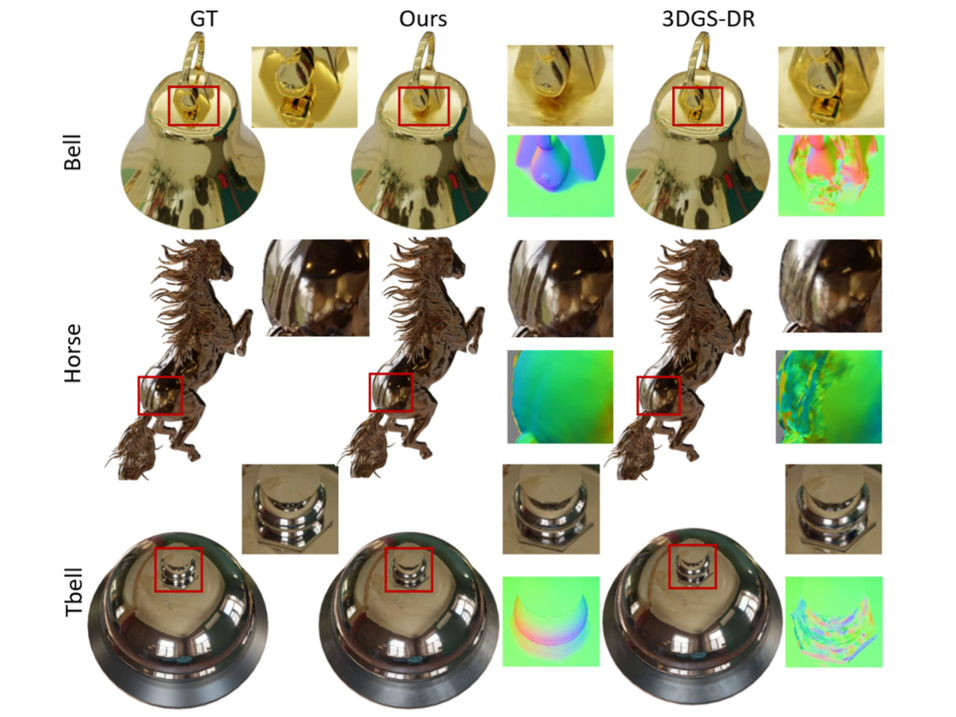
While 3D Gaussian Splatting (3DGS) has revolutionized novel-view synthesis, accurately recovering reflective surfaces remains a significant challenge due to inherent depth estimation errors and the limited capacity of spherical harmonics in representing high-frequency reflections. In this paper, we propose PGSR-DR, a reflection-aware framework that integrates planar-based Gaussian reconstruction with deferred rendering for high-fidelity geometry and appearance recovery. We first establish a reliable geometric foundation by introducing a depth-calculation method for planar-based Gaussians. Our method eliminates conventional estimation artifacts and incorporates joint depth-normal consistency and multi-view supervision to ensure global structural coherence. To capture intricate specularities, we incorporate a learnable environment map within a deferred rendering pipeline that uses Nvdiffrast for efficient sampling and explicit modeling of view-dependent appearances. Experimental results demonstrate that our method achieves competitive rendering quality and notably improved geometric accuracy for reflective surfaces, with planar-based Gaussian primitives closely adhering to the underlying surfaces while maintaining real-time performance
A Unified Viscoelastic Solver for Multiphase Fluid Simulation Based on a Mixture Model
Long Shen, Yalan Zhang, Steffen Frey, and 5 more authors
IEEE Transactions on Visualization and Computer Graphics, Mar 2026
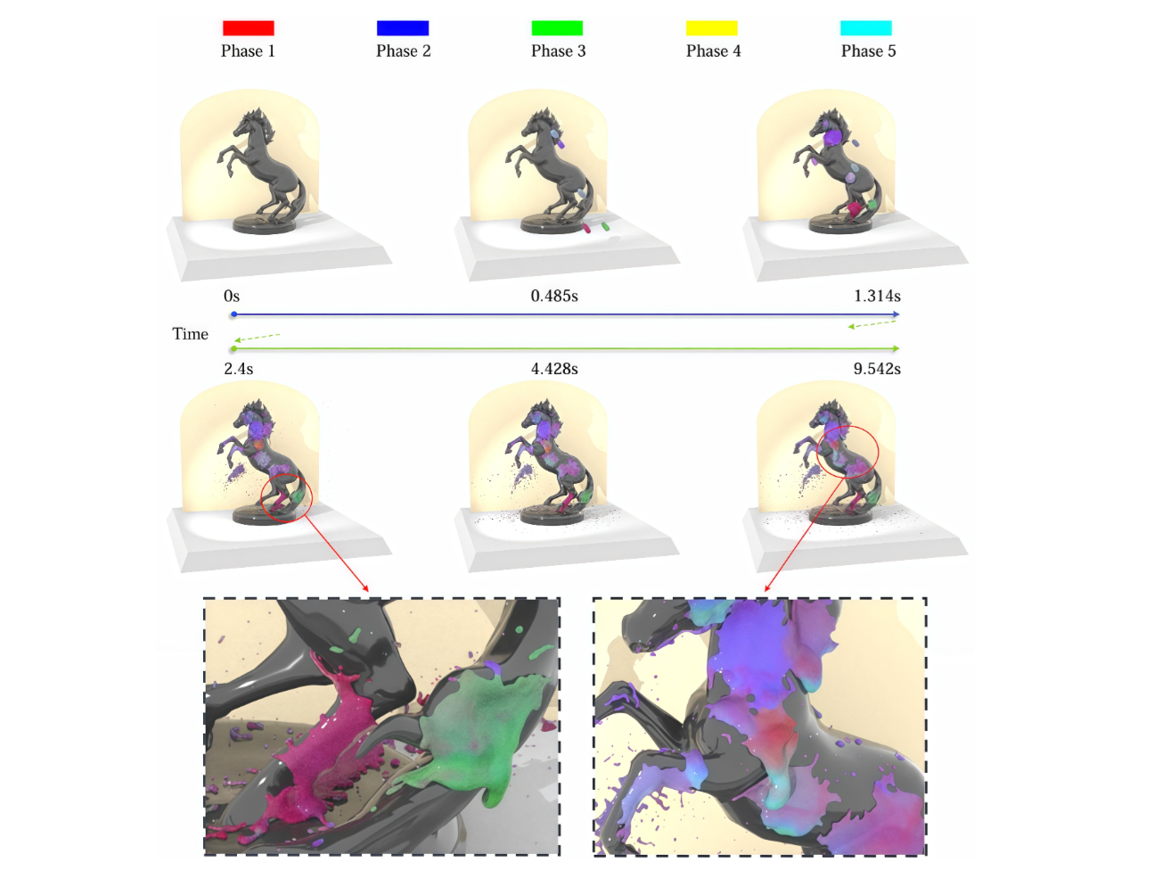
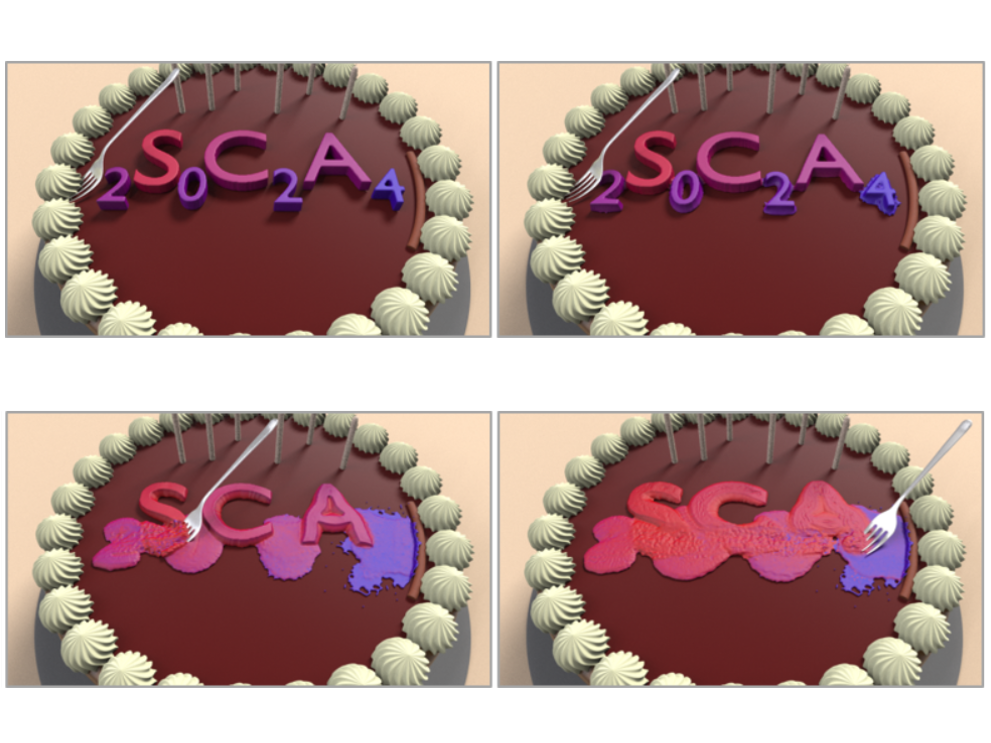
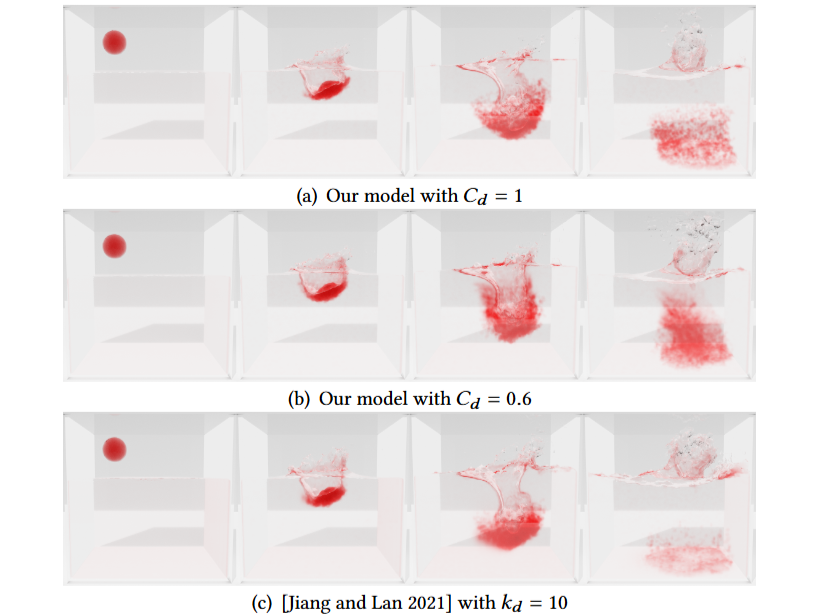
Fluid simulation is a central topic in computer graphics, encompassing a wide range of methodologies for modeling Newtonian, non-Newtonian, and viscoelastic behaviors across both single-phase and multiphase settings. Existing single-phase frameworks have achieved high visual fidelity, yet multiphase simulations remain limited in accurately capturing complex phase interactions, particularly under high-viscosity-ratio or viscoelastic conditions. To address these challenges, we develop a unified multiphase viscoelastic formulation capable of handling diverse fluid types—including Newtonian, shear-dependent non-Newtonian, and viscoelastic flows—within a single consistent framework. The formulation extends mixture-model approaches through a multimode conformation tensor representation, which enhances numerical stability via phase-level stress corrections and efficiently captures a broad spectrum of rheological behaviors. Compared with existing techniques, our framework achieves improved momentum–mass consistency and numerical stability, maintaining physically plausible results across wide viscosity ranges, advancing the state of the art in multiphase viscoelastic fluid simulation
Capability of Large Language Models in Assisting GPs with Diagnoses
Ruibin Wang, Abdul Rehman, Tingting Li, and 5 more authors
Applied Intelligence, Mar 2026
AI-based diagnosisReferral lettersData augmentationLarge language modelsClinical decision support
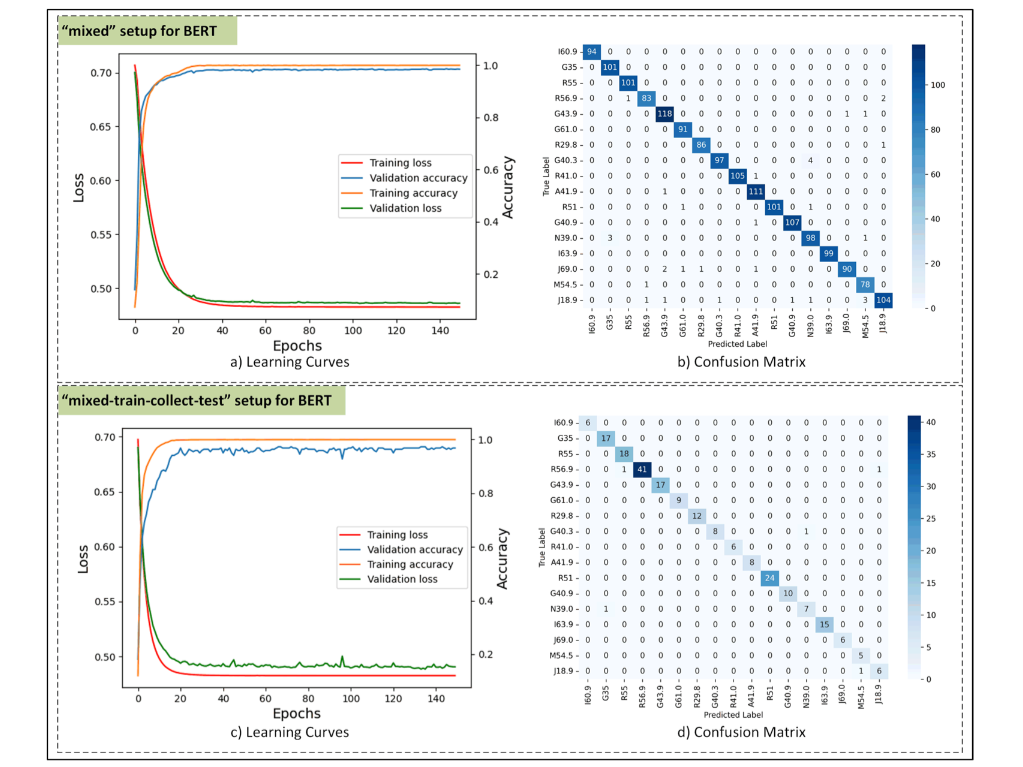
Purpose: A decision support pathway for general practitioners (GPs) was explored through automated referral letter analysis, with large language models’ (LLMs) diagnostic roles comprehensively evaluated. Methods: The in-context learning performance of ChatGPT and GPT-4 for diagnostic decision support was evaluated using referral letters. Synthetic referral letters generated by ChatGPT addressed data scarcity, with distributional congruence quantified via Kullback-Leibler divergence. Two fine-tuning frameworks were comparatively assessed: encoder-based pre-trained language models (PLMs) for diagnostic classification, and decoder-based LLMs adapted to multiple-choice question-answering paradigms. Results: GPT-4 showed suboptimal few-shot accuracy (0.544). Synthetic letters demonstrated high fidelity (KL-divergence<0.05). Encoder-based PLMs consistently outperformed decoder-based LLMs when fine-tuned with augmented data, with BERT achieving 0.977 accuracy in mixed-train-collect-test protocols. Complementary F1 (0.9707) confirmed negligible diagnostic bias. Conclusion: LLMs exhibited insufficient diagnostic accuracy through both direct implementation (GPT-4 few-shot: 0.544) and fine-tuning approaches (accuracy 0.723), establishing fundamental limitations in clinical deployment. Crucially, their text-generation capability was leveraged for structured data augmentation, producing synthetic referral letters with high distributional fidelity (KL-divergence<0.05). This validated methodology enabled superior diagnostic performance through encoder-based PLM fine-tuning, where BERT achieved near-clinical-utility accuracy (0.977) - demonstrating 25.4% relative improvement over best-performing LLMs. Implementation pathways consequently prioritize this hybrid framework: LLM-mediated data augmentation followed by resource-efficient PLM classifiers, currently undergoing neurologist-piloted validation before multicenter expansion
2025
Multiphase Particle-Based Simulation of Poro-Elasto-Capillary Effects
Ruolan Li, Yanrui Xu, Yalan Zhang, and 6 more authors
In Proceedings of the SIGGRAPH Asia 2025 Conference Papers, Dec 2025
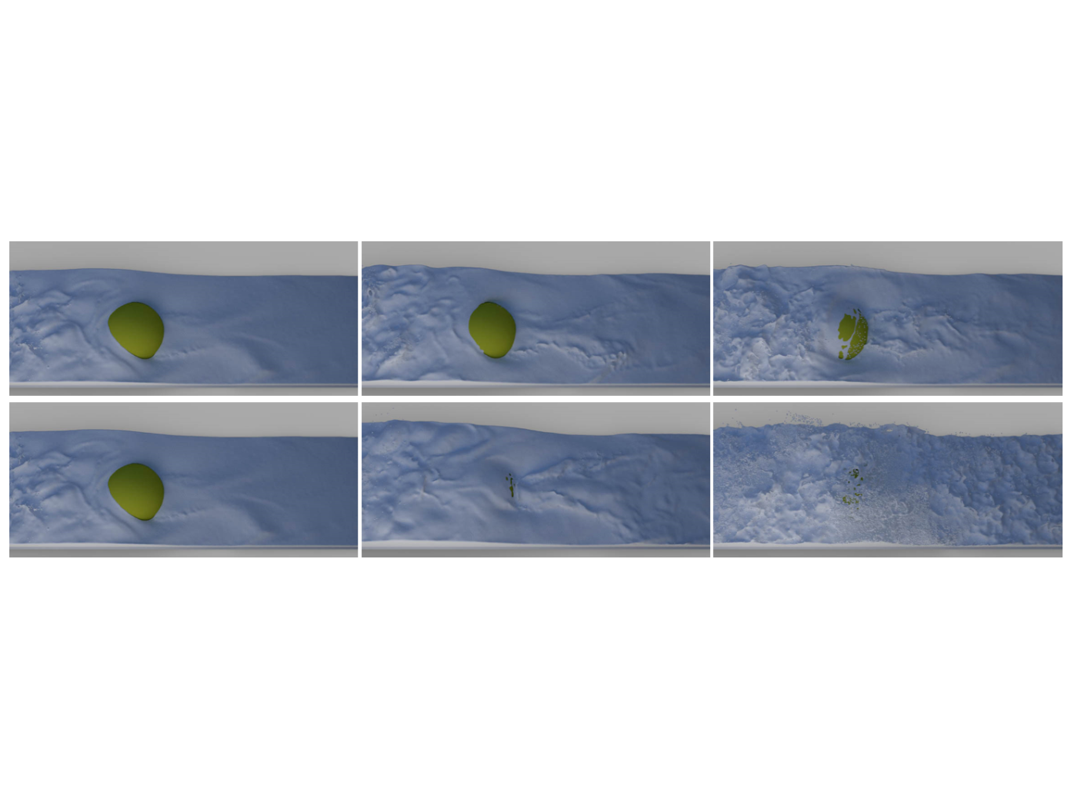
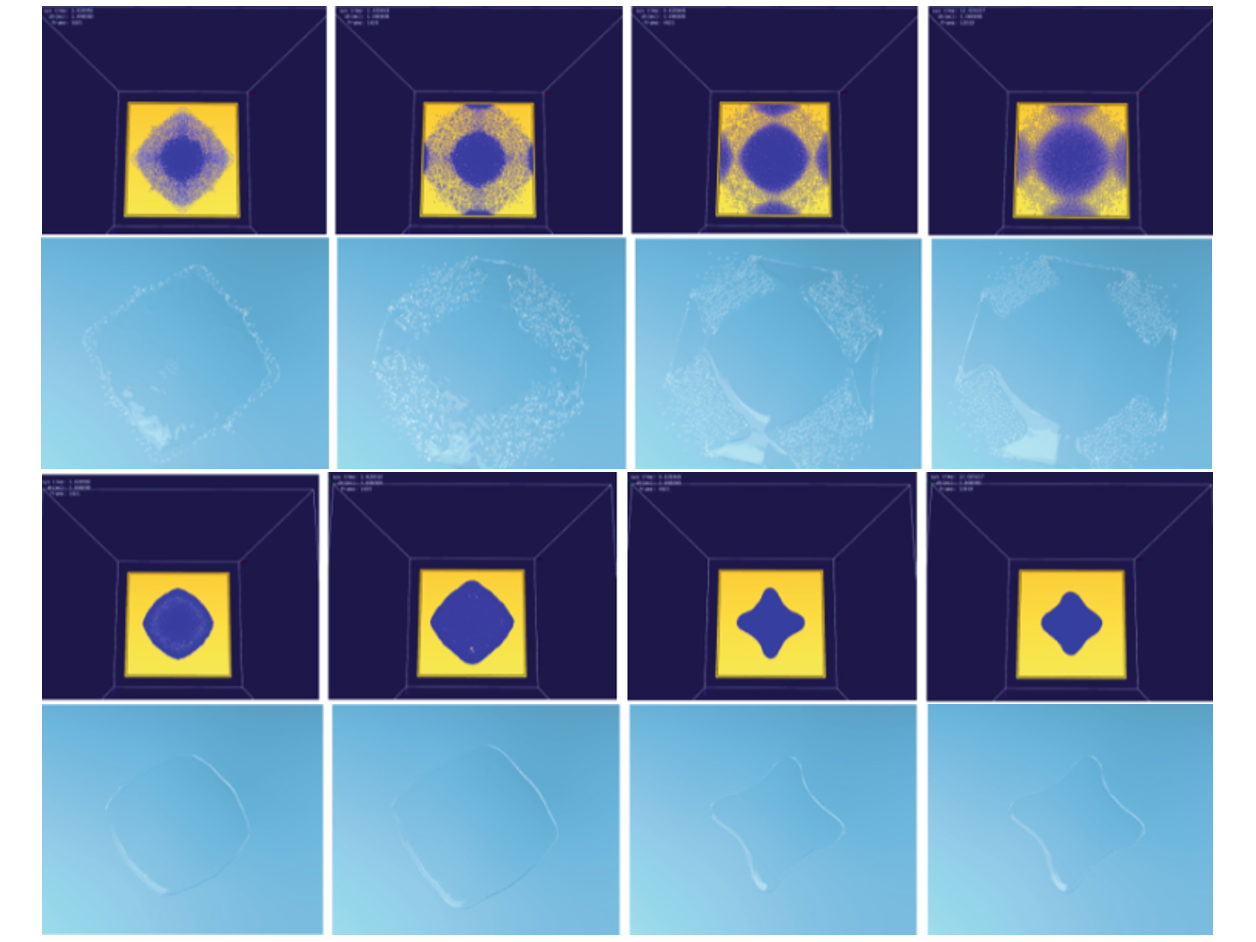
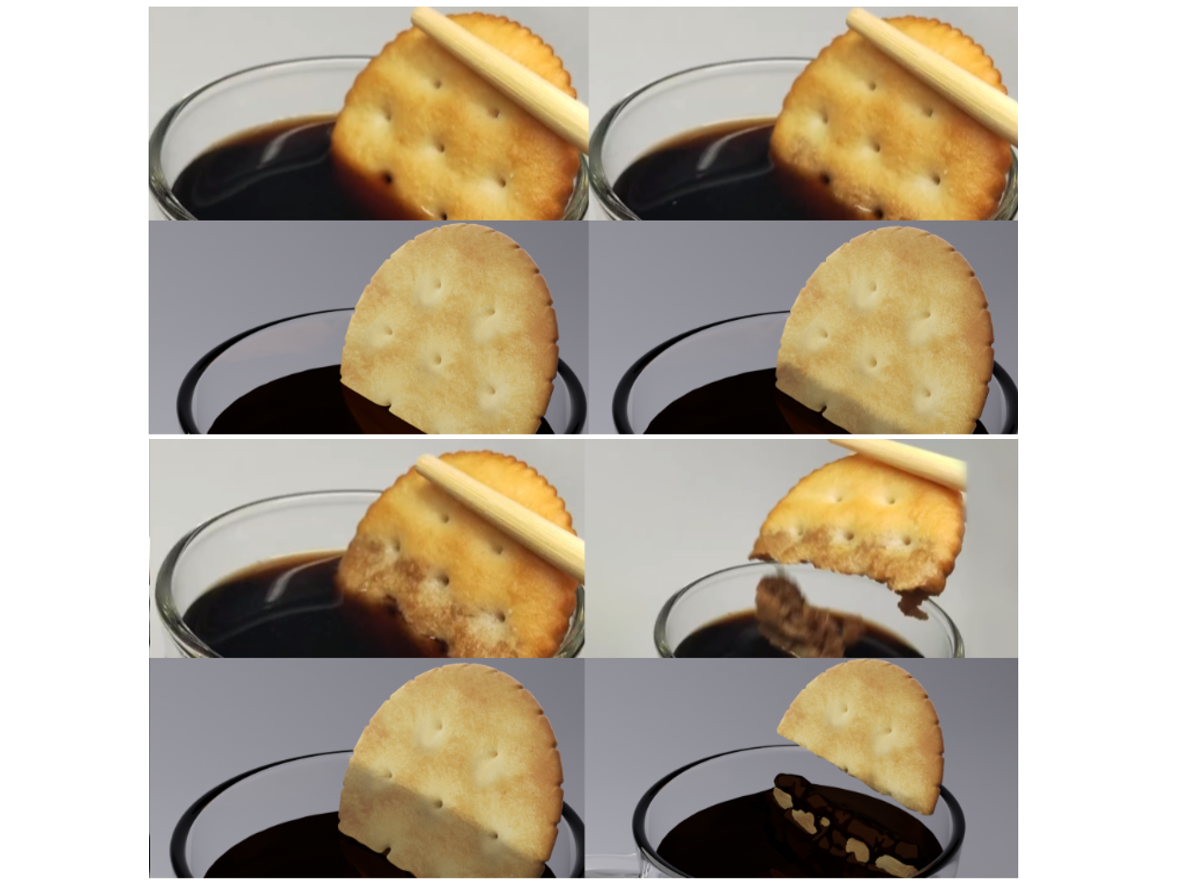
Simulating the interactions between fluids and porous media has attracted significant attention in computer graphics. A key challenge in this domain is modeling the Poro-Elasto-Capillary (PEC) coupling effect which describes the intricate interplay of three physical phenomena in soft porous materials: pore-structure evolution, elastic deformation, and wetting driven by capillary pressure. These phenomena collectively govern dynamic behavior such as the softening and fracturing of biscuits upon water absorption or the swelling of cellulose sponges due to liquid infiltration. Most existing simulation methods model porous media either as static grids or as solid particles with augmented water content attributes, failing to capture the full spectrum of PEC-driven effects due to the lack of physical modeling for elasticity, dynamic porosity changes, and capillary interactions. We propose a multiphase particle-based framework to holistically simulate PEC coupling effects with porous media. We develop a physics-driven model that captures elasticity and dynamic pore-structure evolution under capillary action, enabling realistic simulation of softening and swelling. We derive a saturation-aware pressure Poisson equation to enforce fluid incompressibility within and around the porous medium, ensuring accurate capillary-driven flow while preserving mass and momentum. Finally, we propose a representative elementary volume-based formulation to unify the modeling of homogeneous macro-porous media and cavity-embedded structures, enhancing the representation of pore-scale PEC effects. Comparisons with prior work and real footage show the advantages of our approach in achieving visually realistic fluid-porous media interactions
An Adaptive Boundary Material Point Method with Surface Particle Reconstruction
Haokai Zeng, Dongyu Yang, Yanrui Xu, and 5 more authors
Computer Animation and Virtual Worlds, Oct 2025
adaptive gridscomputer animationmaterial point methodsurface reconstruction
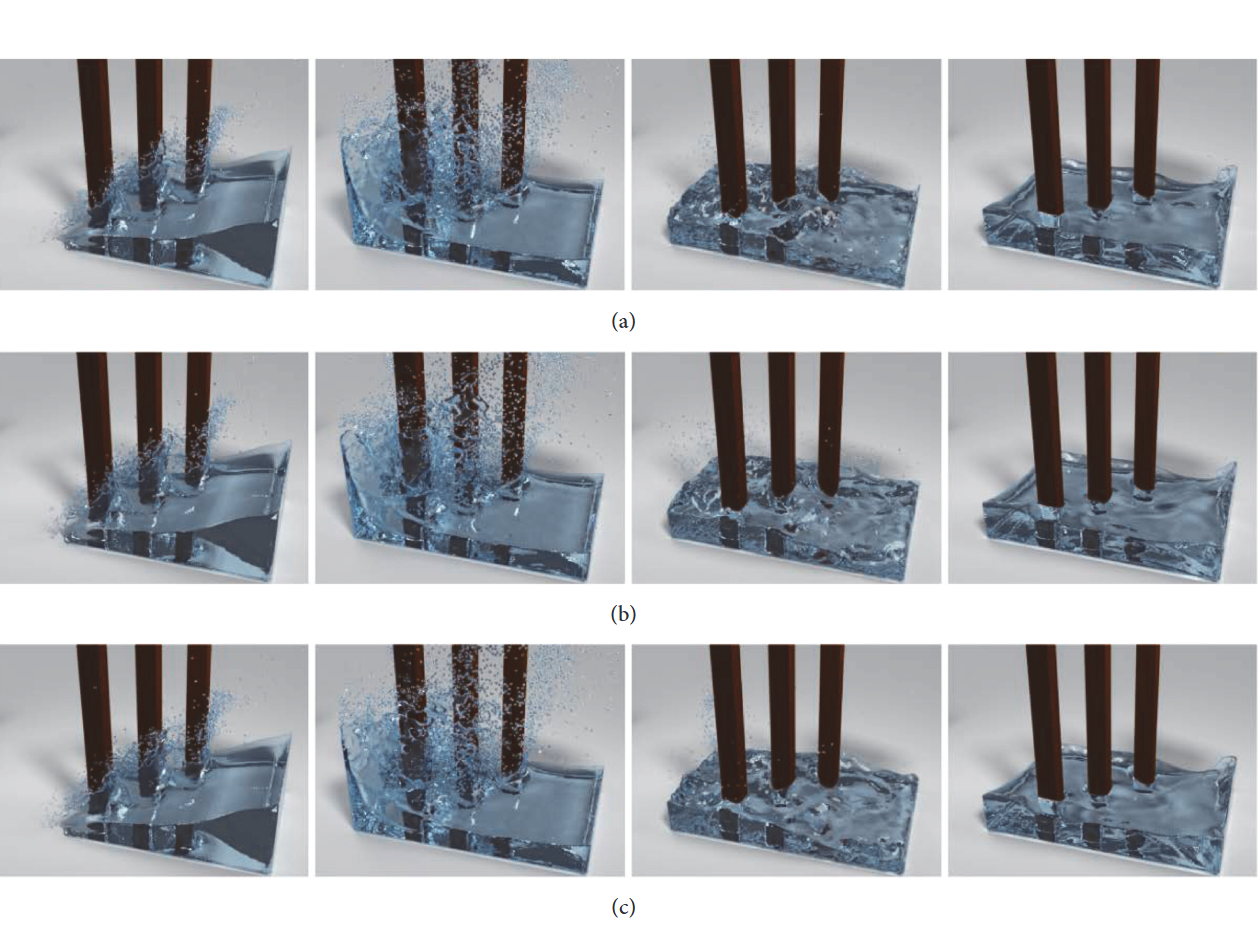
The expression of fine details such as fluid flowing through narrow pipes or split by thin plates poses a significant challenge in simulations involving complex boundary conditions. As a hybrid method, the material point method (MPM), which is widely used for simulating various materials, combines the advantages of Lagrangian particles and Eulerian grids. To achieve accurate simulations of fluid flow through narrow pipes, high-resolution uniform grid cells are necessary, but this often leads to inefficient simulation performance. In this article, we present an adaptive boundary material point method that facilitates adaptive subdivision within regions of interest and conducts collision detection across grids of varying sizes. Within this framework, particles interact through grids of differing resolutions. To tackle the challenge of unevenly distributed subdivided particles, we propose a surface reconstruction approach grounded in the color distance field (CDF), which accurately defines the relationship between the particles and the reconstructed surface. Furthermore, we incorporate a mesh refinement technique to enrich the detail of the mesh utilized to mark the grids during subdivision. We demonstrate the effectiveness of our approach in simulating various materials and boundary conditions, and contrast it with existing methods, underscoring its distinctive advantages
Peridynamics-Based Simulation of Viscoelastic Solids and Granular Materials
Jiamin Wang, Haoping Wang, Xiaokun Wang, and 5 more authors
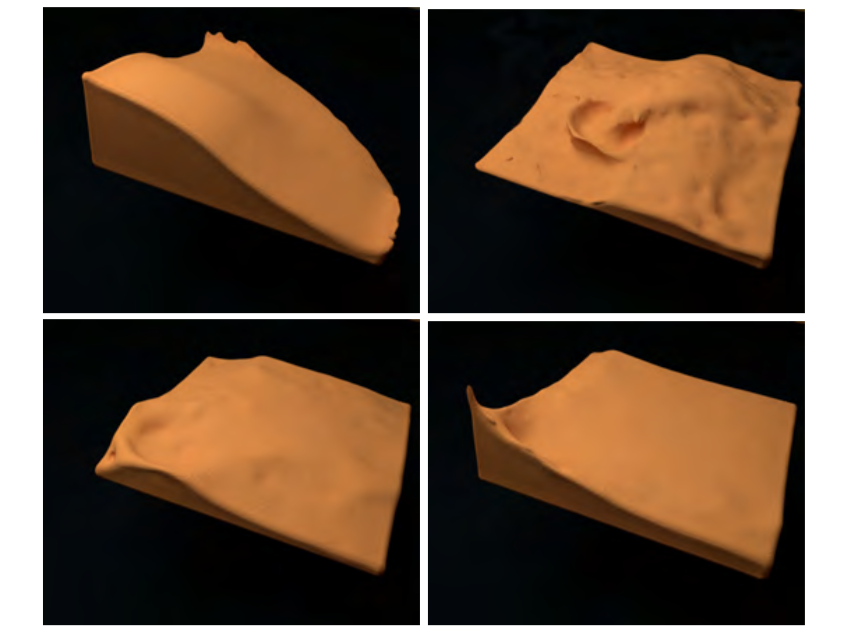
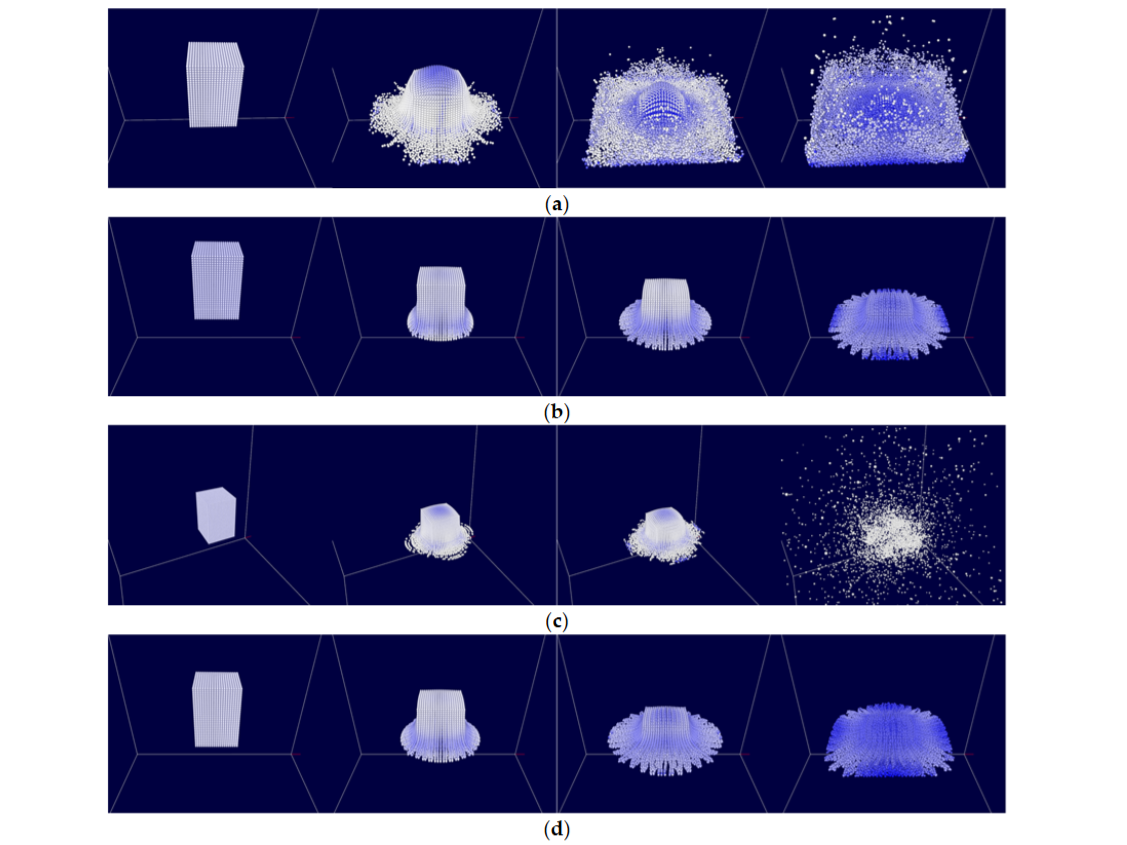
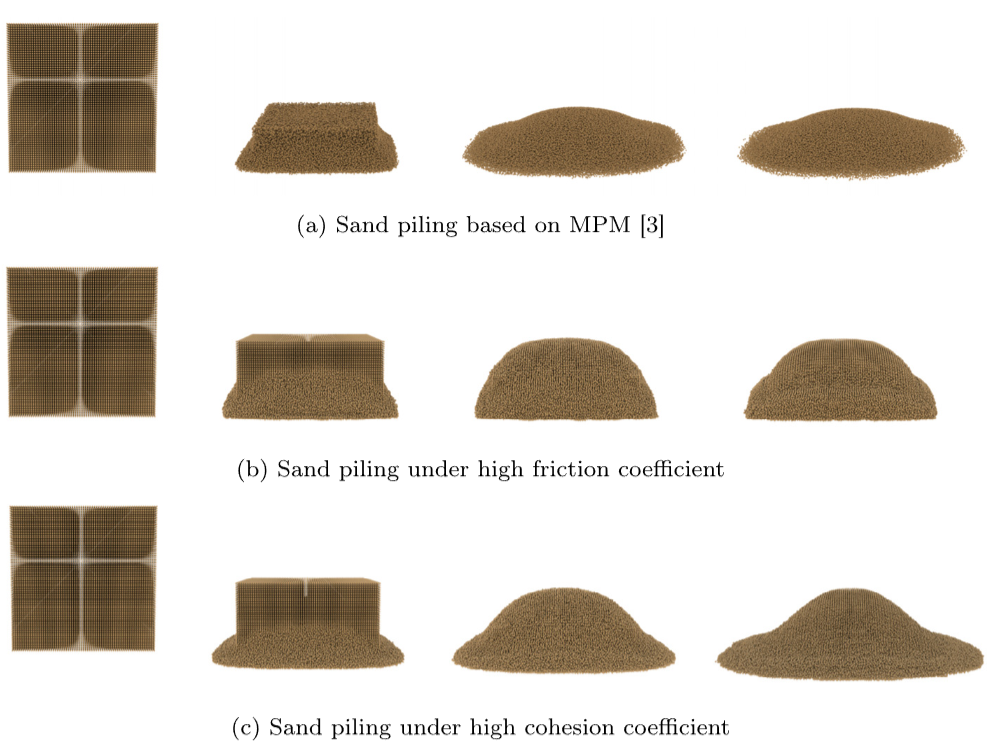
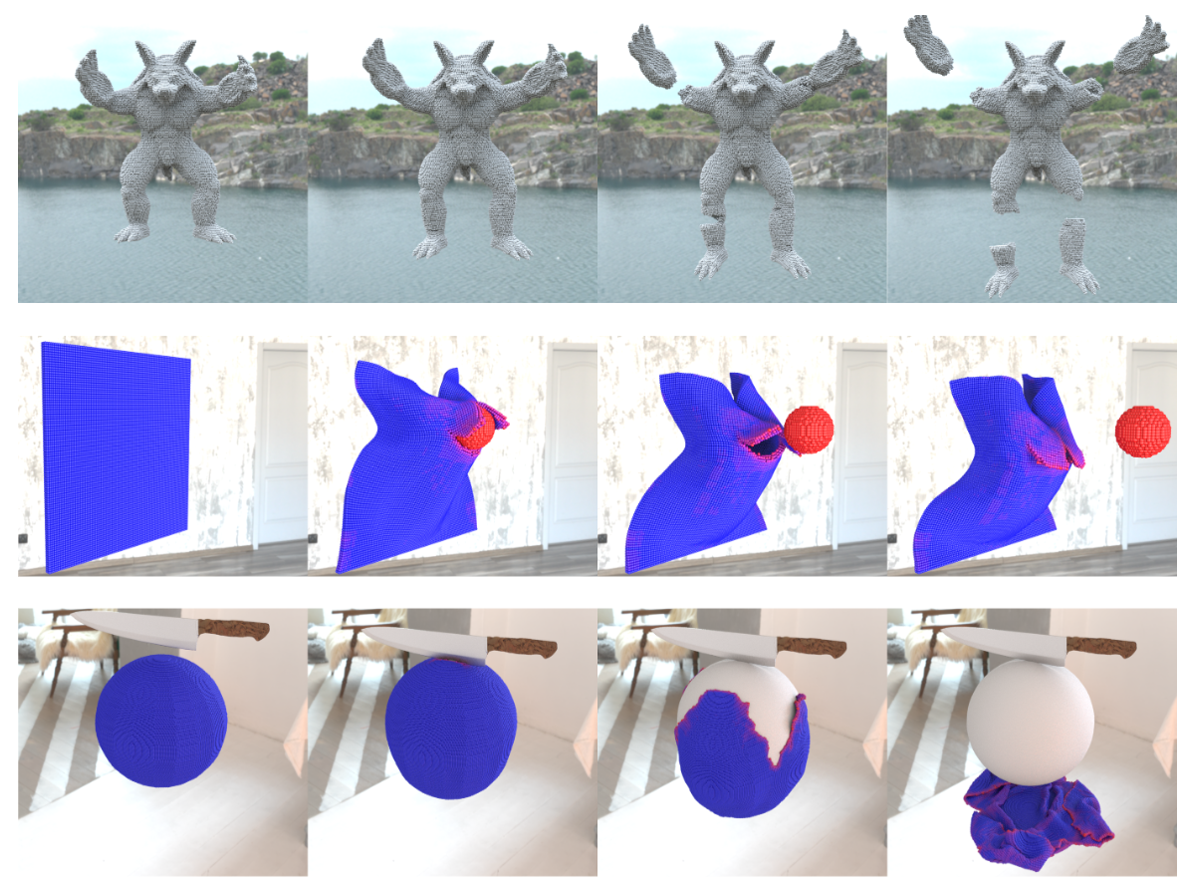
Viscoelastic solids and granular materials have been extensively studied in Classical Continuum Mechanics (CCM). However, CCM faces inherent limitations when dealing with discontinuity problems. Peridynamics, as a non-local continuum theory, provides a novel approach for simulating complex material behavior. We propose a unified viscoelasto-plastic simulation framework based on State-Based Peridynamics (SBPD) which derives a time-dependent unified force density expression through the introduction of the Prony model. Within SBPD, we integrate various yield criteria and mapping strategies to support granular flow simulation, and dynamically adjust material stiffness according to local density. Additionally, we construct a multi-material coupling system incorporating viscoelastic materials, granular flows, and rigid bodies, enhancing computational stability while expanding the diversity of simulation scenarios. Experiments show that our method can effectively simulate relaxation, creep, and hysteresis behaviors of viscoelastic solids, as well as flow and accumulation phenomena of granular materials, all of which are very challenging to simulate with earlier methods. Furthermore, our method allows flexible parameter adjustment to meet various simulation requirements
Spatial Imputation Drives Cross-Domain Alignment for EEG Classification
Hongjun Liu, Chao Yao, Yalan Zhang, and 2 more authors
In Proceedings of the 33rd ACM International Conference on Multimedia, Oct 2025
EEG Signal ImputationEEG ClassificationBrain-Computer InterfaceDomain Adaptation
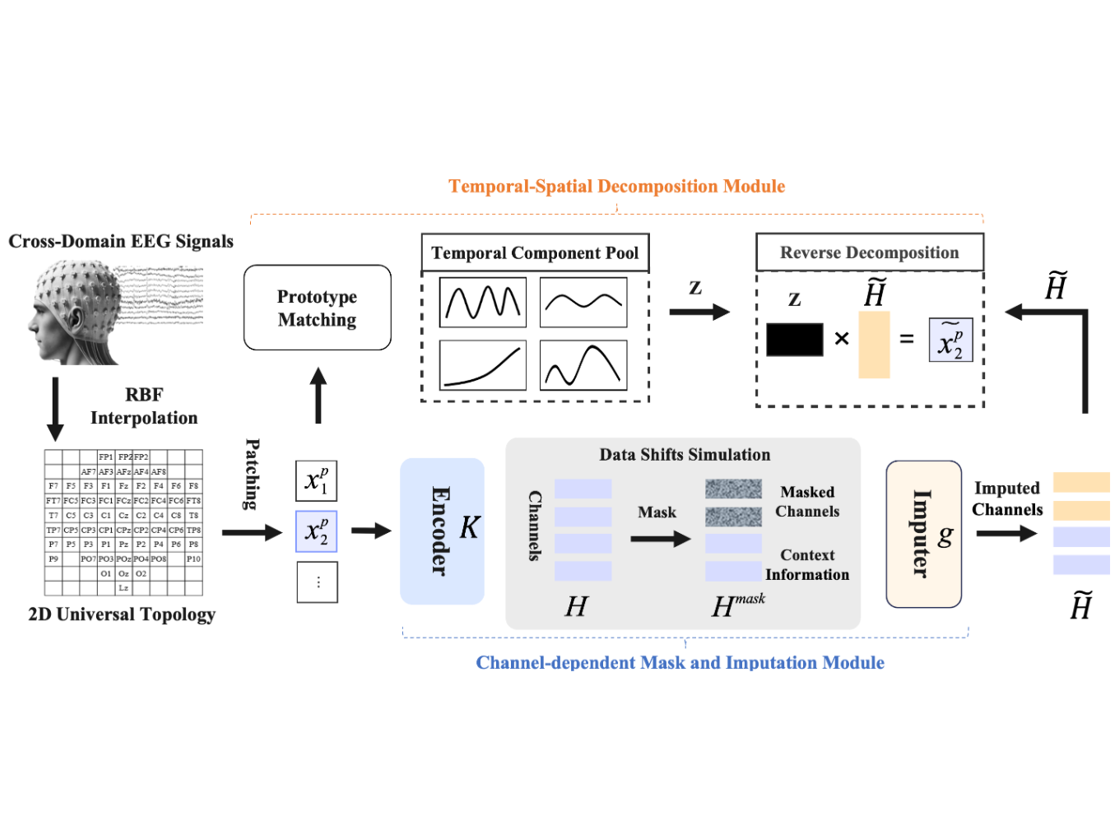
Electroencephalogram (EEG) signal classification faces significant challenges due to data distribution shifts caused by heterogeneous electrode configurations, acquisition protocols, and hardware discrepancies across domains. This paper introduces IMAC, a novel channel-dependent mask and imputation self-supervised framework that formulates the alignment of cross-domain EEG data shifts as a spatial time series imputation task. To address heterogeneous electrode configurations in cross-domain scenarios, IMAC first standardizes different electrode layouts using a 3D-to-2D positional unification mapping strategy, establishing unified spatial representations. Unlike previous mask-based self-supervised representation learning methods, IMAC introduces spatio-temporal signal alignment. This involves constructing a channel-dependent mask and reconstruction task framed as a low-to-high resolution EEG spatial imputation problem. Consequently, this approach simulates crossdomain variations such as channel omissions and temporal instabilities, thus enabling the model to leverage the proposed imputer for robust signal alignment during inference. Furthermore, IMAC incorporates a disentangled structure that separately models the temporal and spatial information of the EEG signals separately, reducing computational complexity while enhancing flexibility and adaptability. Comprehensive evaluations across 10 publicly available EEG datasets demonstrate IMAC’s superior performance, achieving state-of-the-art classification accuracy in both cross-subject and cross-center validation scenarios. Notably, IMAC shows strong robustness under both simulated and real-world distribution shifts, surpassing baseline methods by up to 35% in integrity scores while maintaining consistent classification accuracy
Dynamic Importance Monte Carlo SPH Vortical Flows with Lagrangian Samples
Xingyu Ye, Xiaokun Wang, Yanrui Xu, and 5 more authors
IEEE Transactions on Visualization and Computer Graphics, Sep 2025
Fluid simulationimportance Monte CarloSPHvortical flow
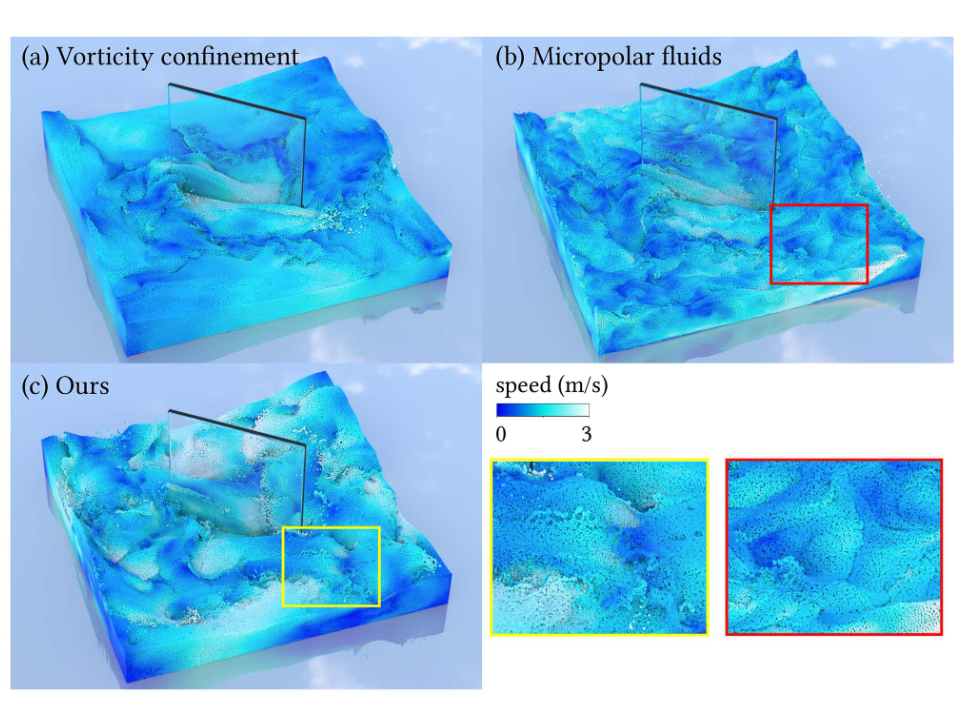
We present a Lagrangian dynamic importance Monte Carlo method without non-trivial random walks for solving the Velocity-Vorticity Poisson Equation (VVPE) in Smoothed Particle Hydrodynamics (SPH) for vortical flows. Key to our approach is the use of the Kinematic Vorticity Number (KVN) to detect vortex cores and to compute the KVN-based importance of each particle when solving the VVPE. We use Adaptive Kernel Density Estimation (AKDE) to extract a probability density distribution from the KVN for the the Monte Carlo calculations. Even though the distribution of the KVN can be non-trivial, AKDE yields a smooth and normalized result which we dynamically update at each time step. As we sample actual particles directly, the Lagrangian attributes of particle samples ensure that the continuously evolved KVN-based importance, modeled by the probability density distribution extracted from the KVN by AKDE, can be closely followed. Our approach enables effective vortical flow simulations with significantly reduced computational overhead and comparable quality to the classic Biot-Savart law that in contrast requires expensive global particle querying
HPIPainting: A Hand-Pen Interaction for VR Painting
Ang Cai, Chao Yao, Hongjun Liu, and 5 more authors
Proceedings of the ACM on Interactive, Mobile, Wearable and Ubiquitous Technologies, Sep 2025
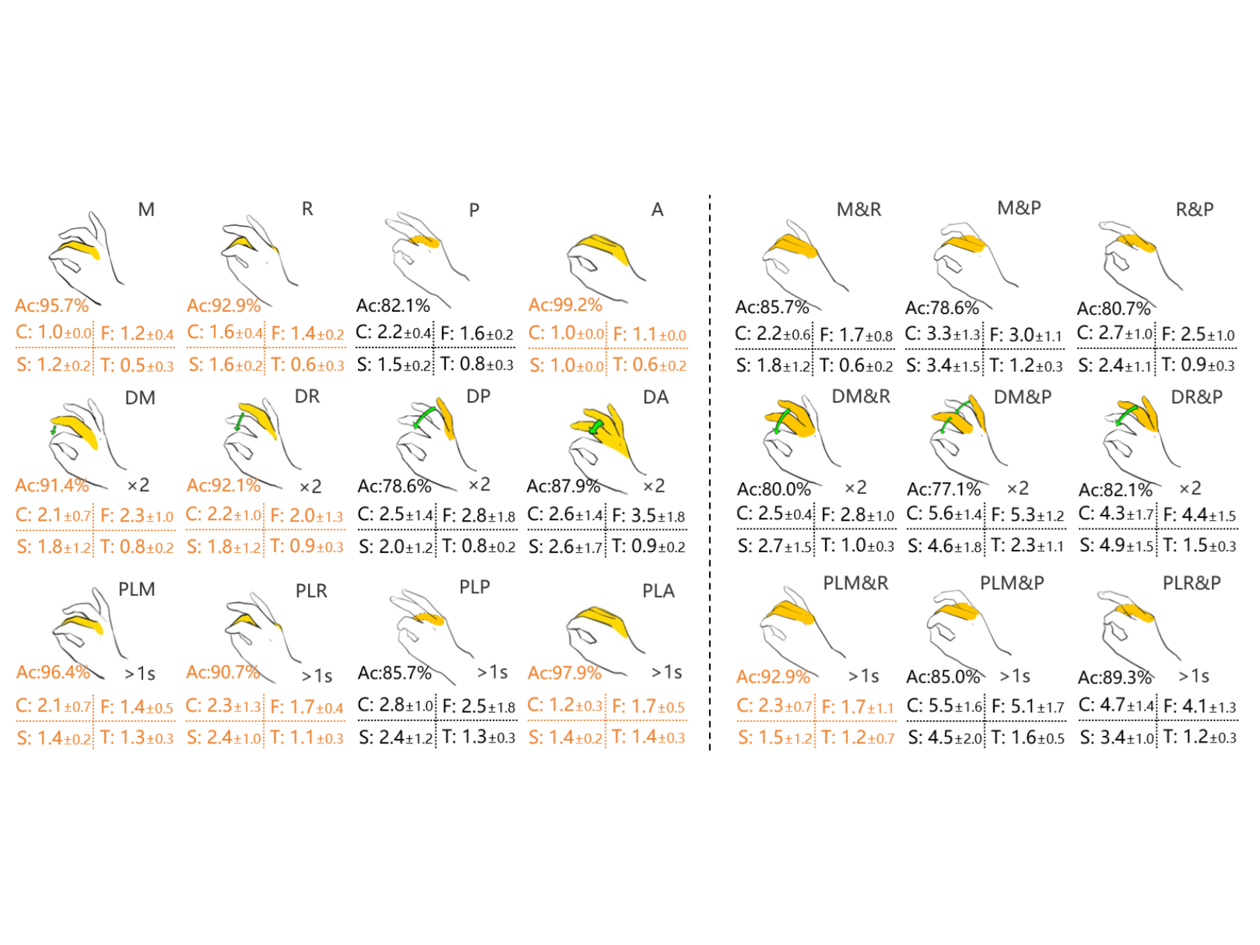
Virtual Reality (VR) painting applications allow users to create visual imagery in 3D space. However, existing bare-hand VR painting and sketching systems frequently rely on generic hand gestures, which could lead to significant user misunderstandings. In this paper, we propose HPIPainting, a bare-hand VR painting system that implements a virtual pen interaction mechanism based on the Hand-Pen Interaction(HPI) paradigm. This paradigm leverages microgesture recognition to integrate natural pen-grasping gestures into a precise interaction model, enabling users to sketch in 3D space naturally and immersively. Specifically, we explored the design space for VR painting gestures and filtered out 9 microgestures through subjective evaluations to control various painting functions, such as start painting, edit, brush adjustment, geometric creation, and grid operations. Studies demonstrate that HPIPainting improves the immersion, usability, and expressive freedom of bare-hand VR Painting, it achieves controller-level drawing accuracy with a mean error of 1.21 mm, fast and reliable mode-switching within 222 ms, and significantly higher ratings for ease of use, hand fatigue, and naturalness compared to pinch- and controller-based input
A Versatile Energy-Based SPH Surface Tension with Spatial Gradients
Qianwei Wang, Yanrui Xu, Xiangyu Sheng, and 5 more authors
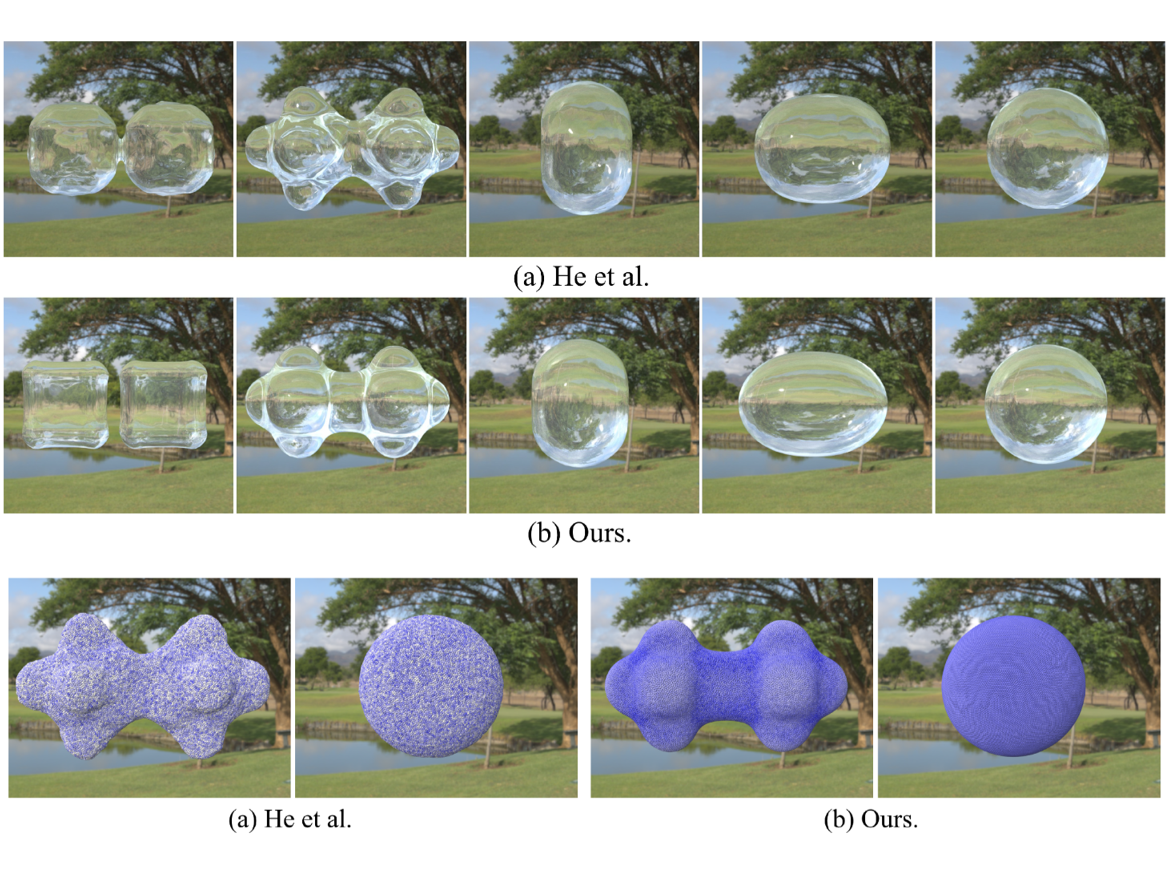
We propose a novel simulation method for surface tension effects based on the Smoothed Particle Hydrodynamics framework, capturing versatile tension effects using a unified interface energy description. Guided by the principle of energy minimization, we compute the interface energy from multiple interfaces solely using the original kernel function estimation, which eliminates the dependence on second-order derivative discretization. Subsequently, we incorporate an inertia term into the energy function to strike a balance between tension effects and other forces. To simulate tension, we propose an energy diffusion-based method for minimizing the objective energy function. The particles at the interface are iteratively shifted from high-energy regions to low-energy regions through several iterations, thereby achieving global interface energy minimization. Furthermore, our approach incorporates surface tension parameters as variable quantities within the energy framework, enabling automatic resolution of tension spatial gradients without requiring explicit computation of interfacial gradients. Experimental results demonstrate that our method effectively captures the wetting, capillary, and Marangoni effects, showcasing significant improvements in both the accuracy and stability of tension simulation
Decoupling Density Dynamics: A Neural Operator Framework for Adaptive Multi-Fluid Interactions
Yalan Zhang, Yuhang Xu, Xiaokun Wang, and 2 more authors
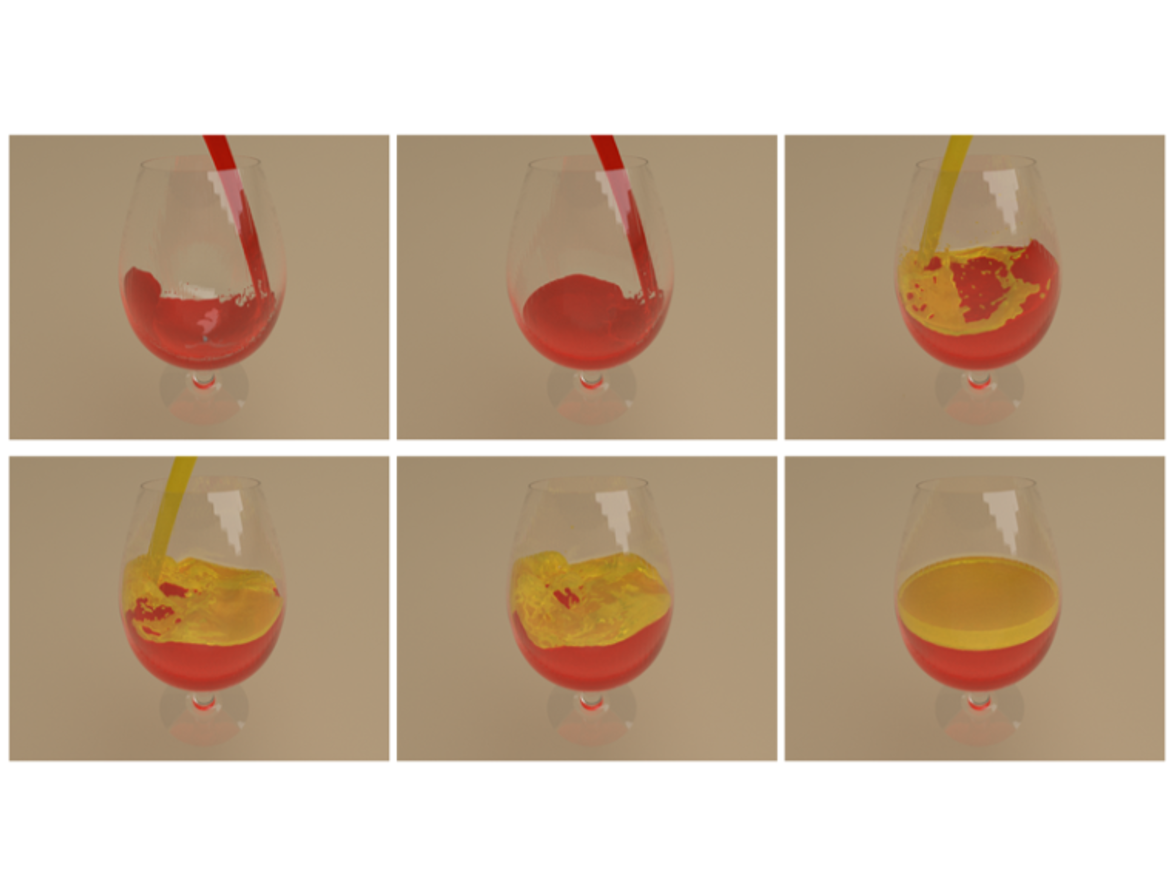
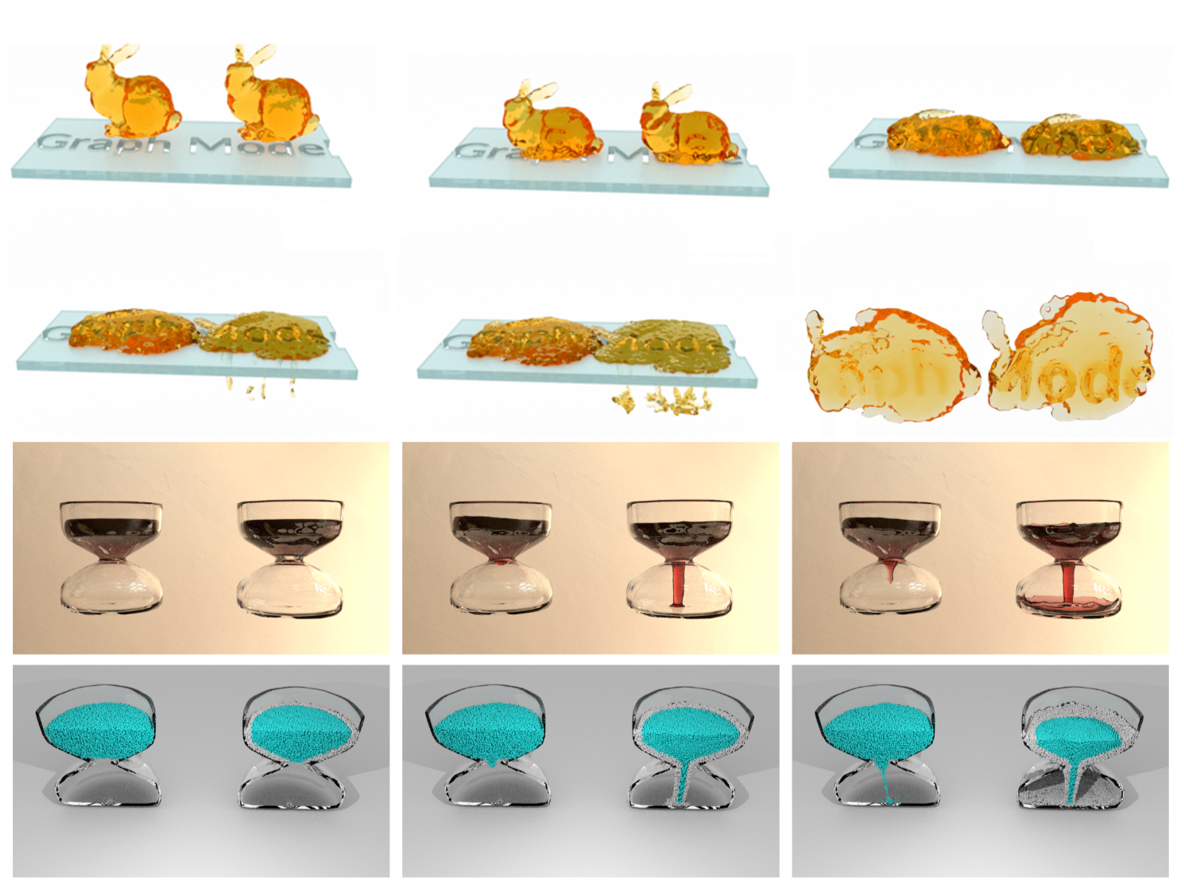
The dynamic interface prediction of multi-density fluids presents a fundamental challenge across computational fluid dynamics and graphics, rooted in nonlinear momentum transfer. We present Density-Conditioned Dynamic Convolution, a novel neural operator framework that establishes differentiable density-dynamics mapping through decoupled operator response. The core theoretical advancement lies in continuously adaptive neighborhood kernels that transform local density distributions into tunable filters, enabling unified representation from homogeneous media to multi-phase fluid. Experiments demonstrate autonomous evolution of physically consistent interface separation patterns in density contrast scenarios, including cocktail and bidirectional hourglass flow. Quantitative evaluation shows improved computational efficiency compared to a SPH method and qualitatively plausible interface dynamics, with a larger time step size
Physics and Geometry-Augmented Neural Implicit Surfaces for Rigid Bodies
Yuanmu Xu, Guanli Hou, Jiangbei Hu, and 7 more authors
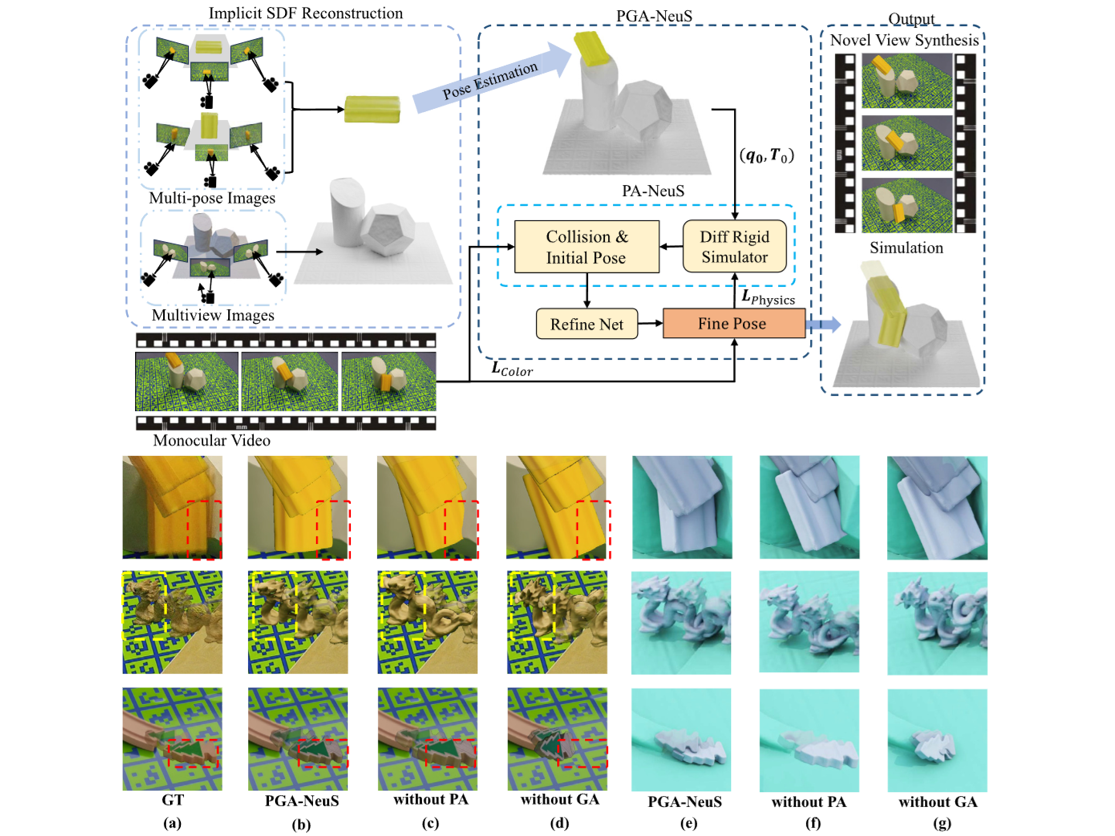
This paper tackles the challenges of physics-based simulation of rigid bodies in neural rendering, with a focus on 3D model representation and collision handling. We propose Physics and Geometry-Augmented Neural Implicit Surfaces (PGA-NeuS), a novel approach that combines neural implicit surfaces with a differentiable physics solver. In the pre-processing stage, PGA- NeuS reconstructs static scene and object geometry from multi-view images using signed distance fields (SDFs). For dynamic scenes captured in monocular videos, these SDFs, along with the initial position and orientation of moving rigid bodies, are fed into a differentiable rigid body solver to optimize physical parameters, such as initial velocity and friction coefficients. Subsequently, PGA- NeuS leverages color loss, physics loss, and object mask supervision to iteratively refine the neural implicit surface, ensuring the target object’s alignment with the predicted motion sequence. We evaluate PGA-NeuS on five real-world scenes, demonstrating its ability to accurately reconstruct realistic motion sequences and estimate physical parameters such as position and velocity. Dataset and source code are available at https://github.com/Raining00/PGA-NeuS
Editable Mesh Animations Modeling Based on Controlable Particles for Real-Time XR
Xiangyang Zhou, Yanrui Xu, Chao Yao, and 2 more authors
IEEE Transactions on Visualization and Computer Graphics, Mar 2025
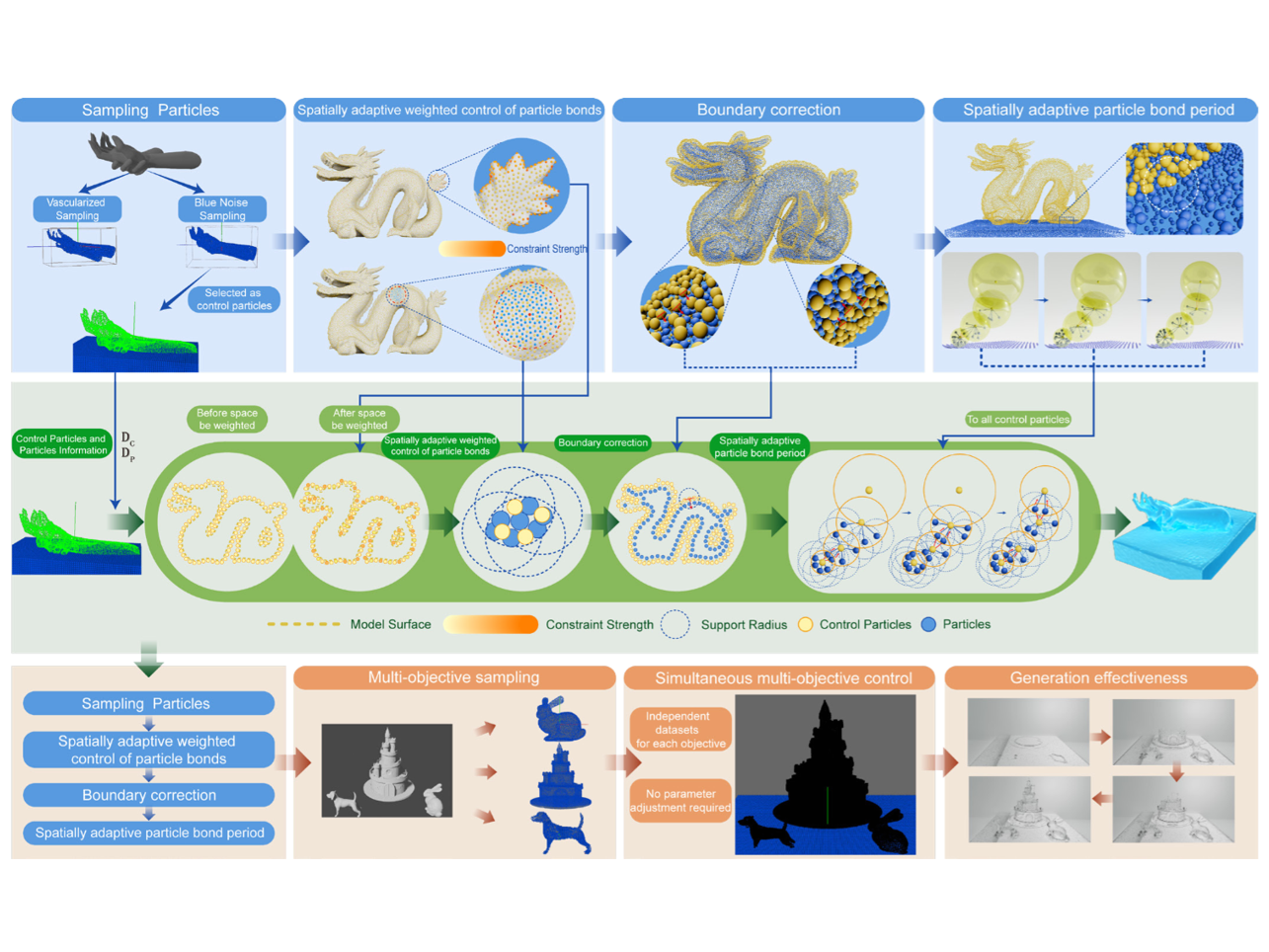
The real-time generation of editable mesh animations in XR applications has been a focal point of research in the XR field. However, easily controlling the generated editable meshes remains a significant challenge. Existing methods often suffer from slow generation speeds and suboptimal results, failing to accurately simulate target objects’ complex details and shapes, which does not meet user expectations. Additionally, the final generated meshes typically require manual user adjustments, and it is difficult to generate multiple target models simultaneously. To overcome these limitations, a universal control scheme for particles based on the sampling features of the target is proposed. It introduces a spatially adaptive control algorithm for particle coupling by adjusting the magnitude of control forces based on the spatial features of model sampling, thereby eliminating the need for parameter dependency and enabling the control of multiple types of models within the same scene. We further introduce boundary correction techniques to improve the precision in generating target shapes while reducing particle splashing. Moreover, a distance-adaptive particle fragmentation mechanism prevents unnecessary particle accumulation. Experimental results demonstrate that the method has better performance in controlling complex structures and generating multiple targets at the same time compared to existing methods. It enhances control accuracy for complex structures and targets under the condition of sparse model sampling. It also consistently delivers outstanding results while maintaining high stability and efficiency. Ultimately, we were able to create a set of smooth editable meshes and developed a solution for integrating this algorithm into VR and AR animation applications
2024
Visual Simulation of Bone Cement Blending and Dynamic Flow
Long Shen, Yalan Zhang, Steffen Frey, and 4 more authors
In 2024 IEEE International Conference on Bioinformatics and Biomedicine (BIBM), Dec 2024
Medical visualizationBone filling simulationMultiphase non-Newtonian fluid modelingBone cement effects
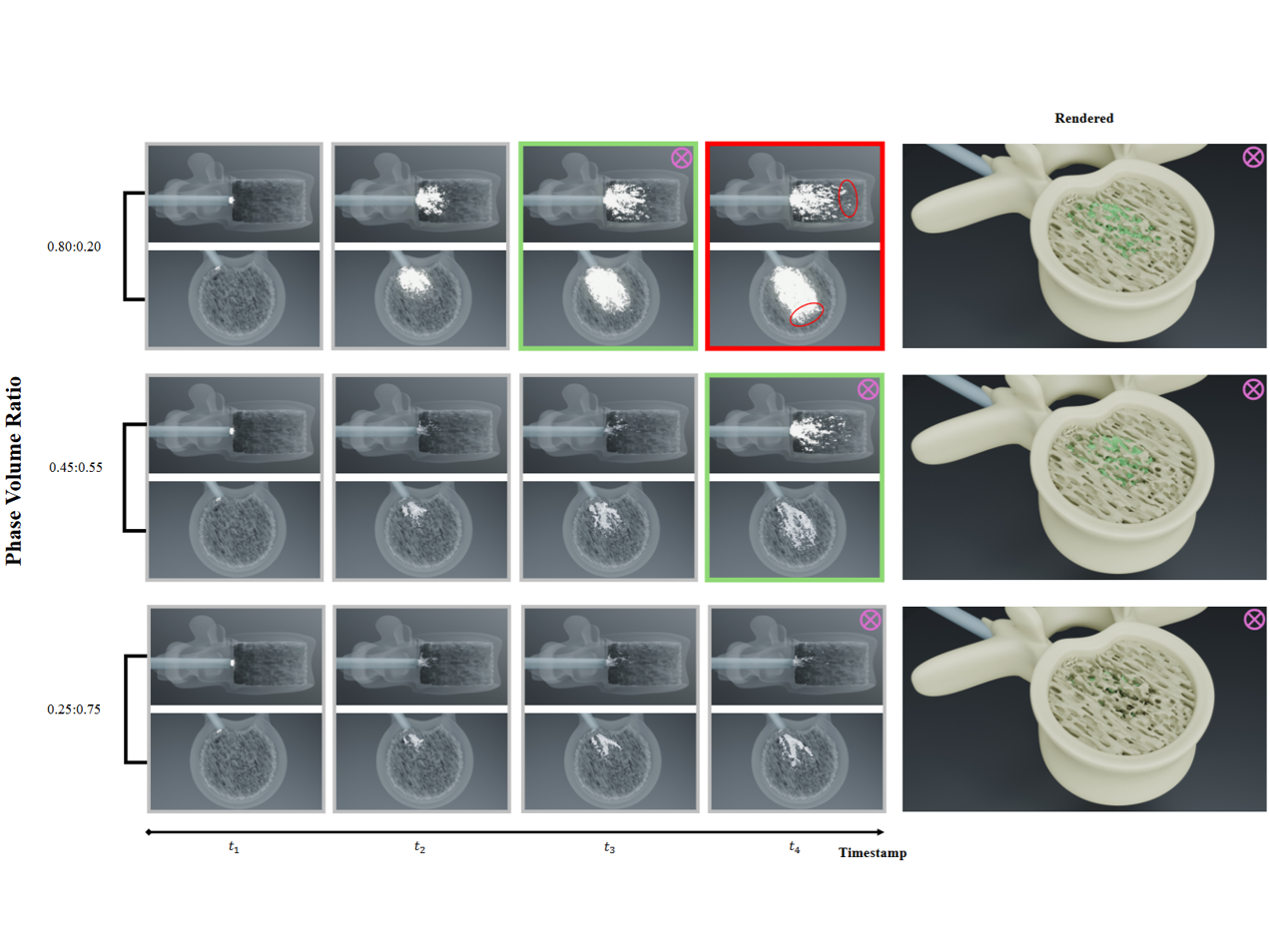
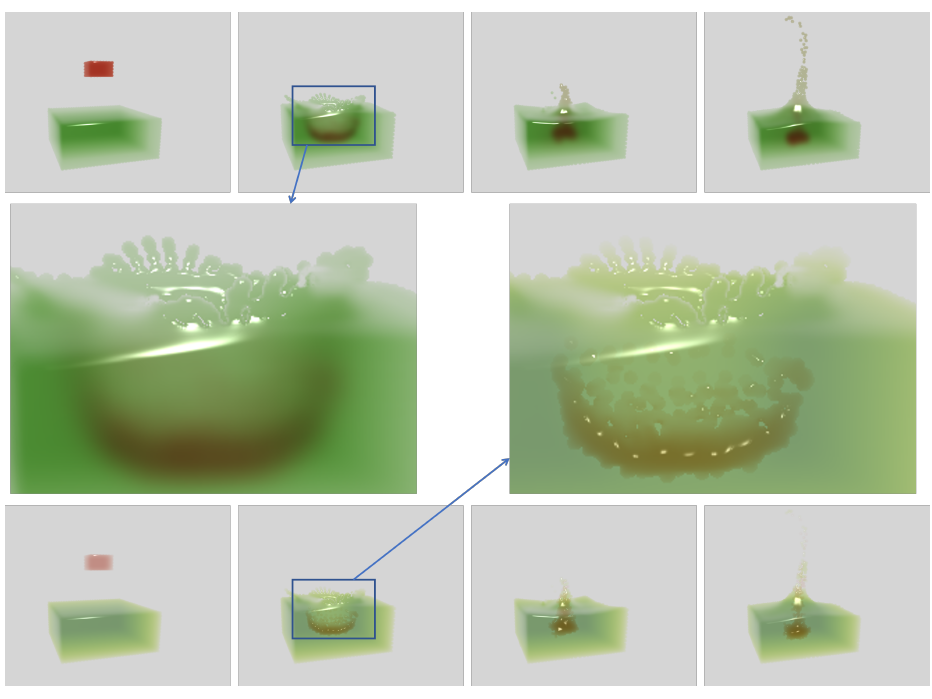
Bone cement filling is an important method for preventing osteoporosis and treating fractures. In bone cement filling surgery, the preparation and dosage of the cement usually depend on specific product manuals and the doctor’s experience. If bone cement is not used properly, it may cause additional damage. For teaching and auxiliary medical purposes, for example, assisting doctors to observe the possible flow of bone cement, this paper proposes a multiphase non-Newtonian fluid simulation method to simulate and visualize the flow behavior during the wet sand phase of bone cement blending and polymerization. Our method enables showing intuitively the application process of bone cement under different scene settings to obtain dynamic bone cement effects with high stability and performance. Compared with other methods, our method can simulate highly viscous mixed fluids efficiently and robustly, which supports our method’s usage in the aforementioned training and experimentation scenarios
Fast and Compact Partial Differential Equation (PDE)-Based Dynamic Reconstruction of Extended Position-Based Dynamics (XPBD) Deformation Simulation
Junheng Fang, Zhidong Xiao, Xiaoqiang Zhu, and 3 more authors
Mathematics, Oct 2024
deformation simulationdynamic PDE sweeping surfaceintegration of PDE-based reconstruction and XPBD
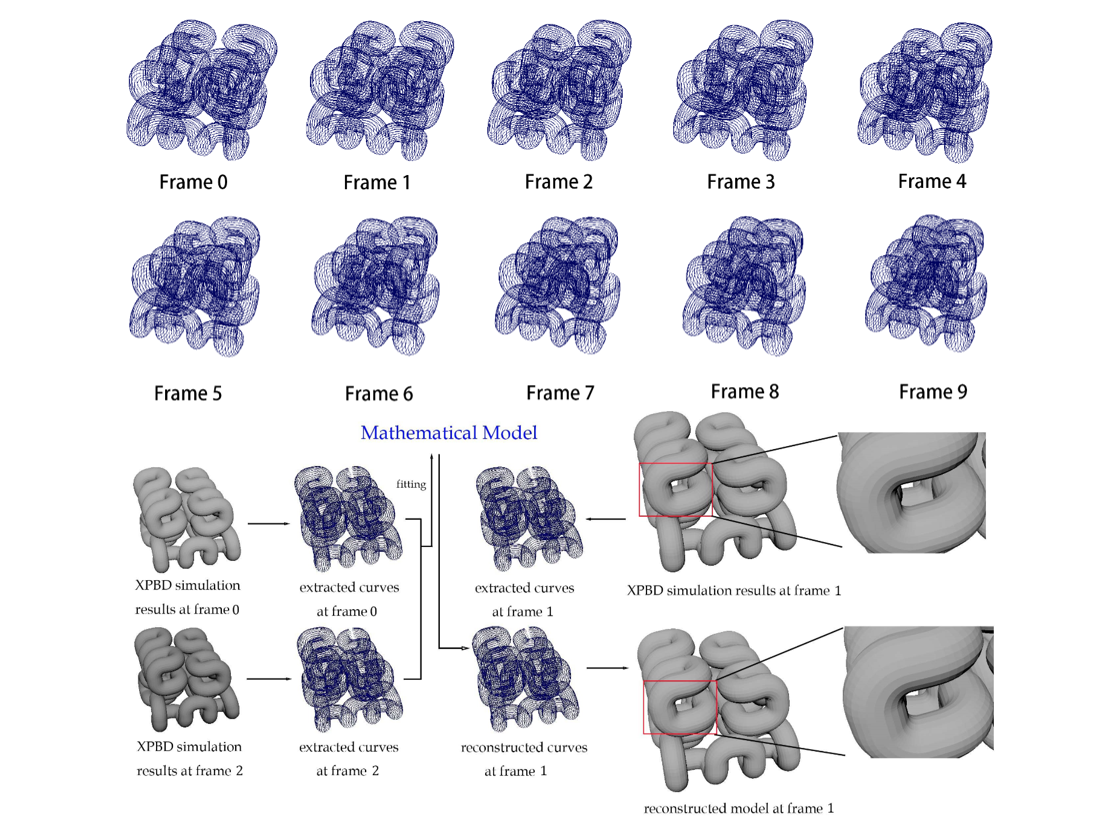
Dynamic simulation is widely applied in the real-time and realistic physical simulation field. How to achieve natural dynamic simulation results in real-time with small data sizes is an important and long-standing topic. In this paper, we propose a dynamic reconstruction and interpolation method grounded in physical principles for simulating dynamic deformations. This method replaces the deformation forces of the widely used eXtended Position-Based Dynamics (XPBD), which are traditionally derived from the gradient of the energy potential defined by the constraint function, with the elastic beam bending forces to more accurately represent the underlying deformation physics. By doing so, it establishes a mathematical model based on dynamic partial differential equations (PDE) for reconstruction, which are the differential equations involving both the parametric variable u and the time variable t. This model also considers the inertia forces caused by acceleration. The analytical solution to this model is then integrated with the XPBD framework, built upon Newton’s equations of motion. This integration reduces the number of design variables and data sizes, enhances simulation efficiency, achieves good reconstruction accuracy, and makes deformation simulation more capable. The experiment carried out in this paper demonstrates that deformed shapes at about half of the keyframes simulated by XPBD can be reconstructed by the proposed PDE-based dynamic reconstruction algorithm quickly and accurately with a compact and analytical representation, which outperforms static B-spline-based representation and interpolation, greatly shortens the XPBD simulation time, and represents deformed shapes with much smaller data sizes while maintaining good accuracy. Furthermore, the proposed PDE-based dynamic reconstruction algorithm can generate continuous deformation shapes, which cannot be generated by XPBD, to raise the capacity of deformation simulation
We propose an SPH-based method for simulating viscoelastic non-Newtonian fluids within a multiphase framework. For this, we use mixture models to handle component transport and conformation tensor methods to handle the fluid’s viscoelastic stresses. In addition, we consider a bonding effects network to handle the impact of microscopic chemical bonds on phase transport. Our method supports the simulation of both steady-state viscoelastic fluids and discontinuous shear behavior. Compared to previous work on single-phase viscous non-Newtonian fluids, our method can capture more complex behavior, including material mixing processes that generate non-Newtonian fluids. We adopt a uniform set of variables to describe shear thinning, shear thickening, and ordinary Newtonian fluids while automatically calculating local rheology in inhomogeneous solutions. In addition, our method can simulate large viscosity ranges under explicit integration schemes, which typically requires implicit viscosity solvers under earlier single-phase frameworks
Shape Prior Enhanced U-Net Model for Medical Image Segmentation
Song Fang, Jiamin Wang, Zirun Zhao, and 5 more authors
In 2024 International Conference on Communications, Computing, Cybersecurity, and Informatics (CCCI), Oct 2024
Medical Image SegmentationShape PriorUshaped NetworkTransformer
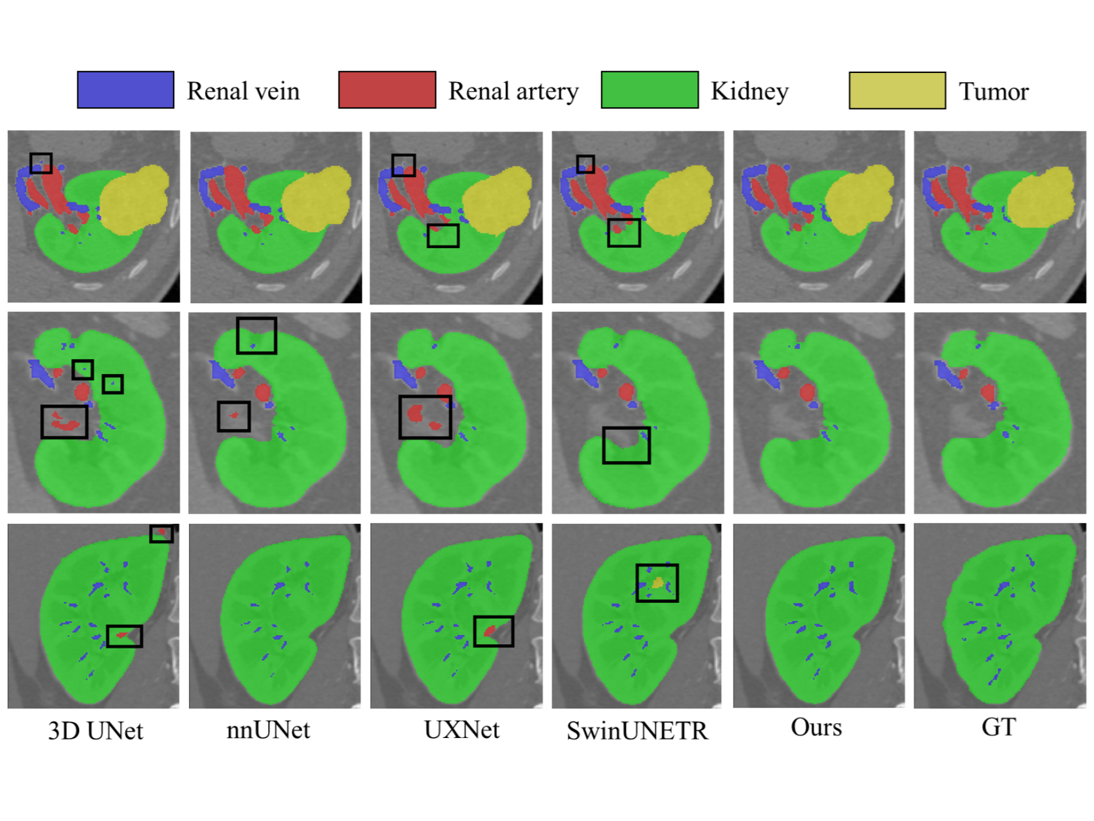
Medical image segmentation is a critical and challenging task in modern medicine. This task faces issues such as low contrast between the target structures and surrounding tissues, as well as uncertainties in the morphology and location of pathological tissues. These challenges often result in the suboptimal performance of traditional segmentation methods, especially when dealing with complex structures. To address these issues, we propose a UNet model integrated with shape priors. This model utilizes a Shape Prior Module (SPM) to generate and update shape knowledge, which is then integrated as feature maps into the skip connections of the U-shaped network. By combining global and local information, the SPM enhances the network’s comprehensive understanding of the image. Additionally, this module can be seamlessly integrated with the convolutional neural network architecture, enhancing the model’s practicality and generalization capabilities. Moreover, we design a comprehensive loss function that integrates Dice, CE, and BoundaryDoU metrics, significantly improving the efficiency of model parameter optimization and learning. Experimental results on two medical image datasets demonstrate that the proposed shape prior network model yields better outcomes in enhancing segmentation accuracy and improving classification detection precision
Real-Time Screen Space Rendering Method for Particle-Based Multiphase Fluid Simulation
Yalan Zhang, Yuhang Xu, Yanrui Xu, and 5 more authors
Simulation Modelling Practice and Theory, Aug 2024
Visual SimulationReal-Time RenderingMultiphase FluidScreen Space Rendering
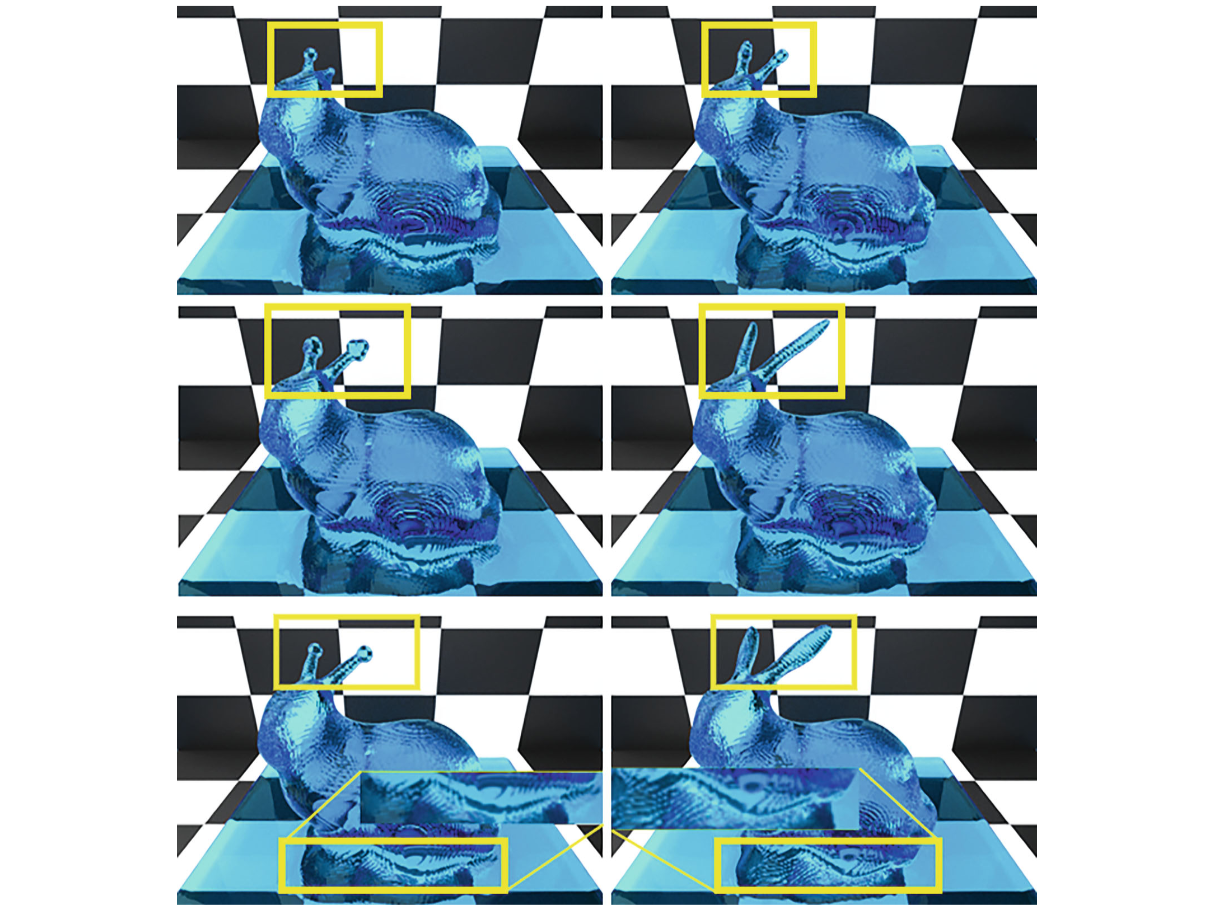
Existing fluid simulation techniques mainly process single-phase fluids, and they have difficulties in accurately simulating and visualizing multiphase fluid dynamics. This paper proposes a new method for the real-time rendering of multiphase fluid simulations, which uses smoothed particle hydrodynamics in screen space. Meanwhile, the method employs phase fraction textures to differentiate various materials in multiphase fluid simulations, thereby portraying mixing and separation effects more realistically. Besides, efficient texture computation allows it to be integrated seamlessly into real-time simulation rendering workflows. Extensive testing confirms the effectiveness of the proposed method in rendering multiphase fluid behaviors with high visual fidelity and demonstrates its capability to process frames within 0.01 seconds, even in cases with up to 300,000 particles. This study enhances the fluid dynamics simulation field and provides a more accurate and efficient method for visualizing complex multiphase fluids in simulations
Who Looks like Me: Semantic Routed Image Harmonization
Jinsheng Sun, Chao Yao, Xiaokun Wang, and 3 more authors
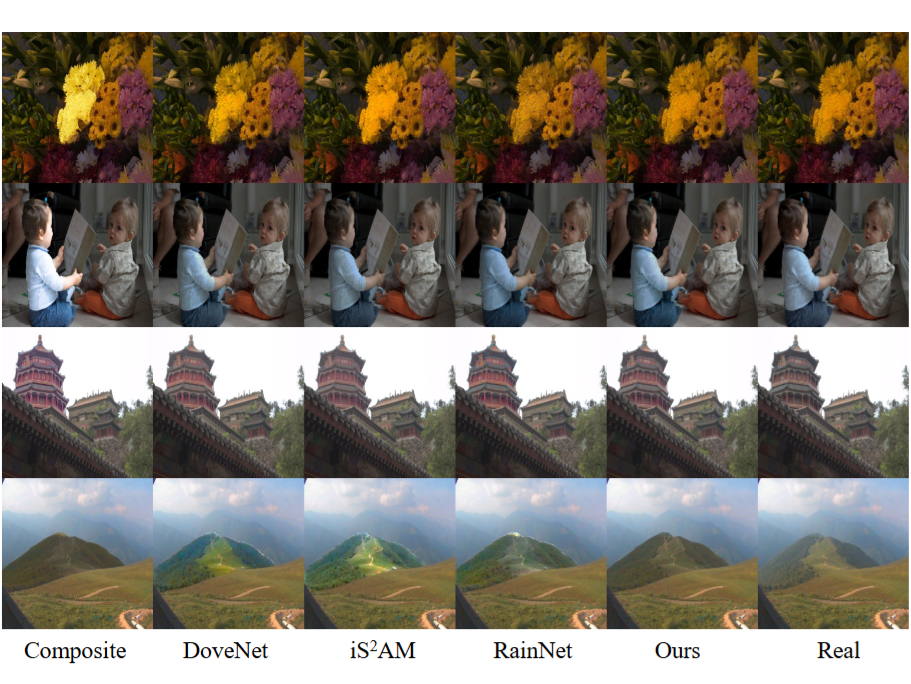
Image harmonization, aiming to seamlessly blend extraneous foreground objects with background images, is a promising and challenging task. Ensuring a synthetic image appears realistic requires maintaining consistency in visual characteristics, such as texture and style, across global and semantic regions. In this paper, We approach image harmonization as a semantic routed style transfer problem, and propose an image harmonization model by routing semantic similarity explicitly to enhance the consistency of appearance characteristics. To refine calculate the similarity between the composed foreground and background instance, we propose an Instance Similarity Evaluation Module (ISEM). To harness analogous semantic information effectively, we further introduce Style Transfer Block (STB) to establish fine-grained foregroundbackground semantic correlation. Our method has achieved excellent experimental results on existing datasets and our model outperforms the stateof-the-art by a margin of 0.45 dB on iHarmony4 dataset. Our code is available in github
Peridynamic-Based Modeling of Elastoplasticity and Fracture Dynamics
Haoping Wang, Xiaokun Wang, Yanrui Xu, and 4 more authors
This paper introduces a particle-based framework for simulating the behavior of elastoplastic materials and the formation of fractures, grounded in Peridynamic theory. Traditional approaches, such as the Finite Element Method (FEM) and Smoothed Particle Hydrodynamics (SPH), to modeling elastic materials have primarily relied on discretization techniques and continuous constitutive model. However, accurately capturing fracture and crack development in elastoplastic materials poses significant challenges for these conventional models. Our approach integrates a Peridynamic-based elastic model with a density constraint, enhancing stability and realism. We adopt the Von Mises yield criterion and a bond stretch criterion to simulate plastic deformation and fracture formation, respectively. The proposed method stabilizes the elastic model through a density-based position constraint, while plasticity is modeled using the Von Mises yield criterion within the bond of particle paris. Fracturing and the generation of fine fragments are facilitated by the fracture criterion and the application of complementarity operations to the inter-particle connections. Our experimental results demonstrate the efficacy of our framework in realistically depicting a wide range of material behaviors, including elasticity, plasticity, and fracturing, across various scenarios
Dual-Mechanism Surface Tension Model for SPH-Based Simulation
Yuege Xiong, Xiaokun Wang, Yanrui Xu, and 4 more authors
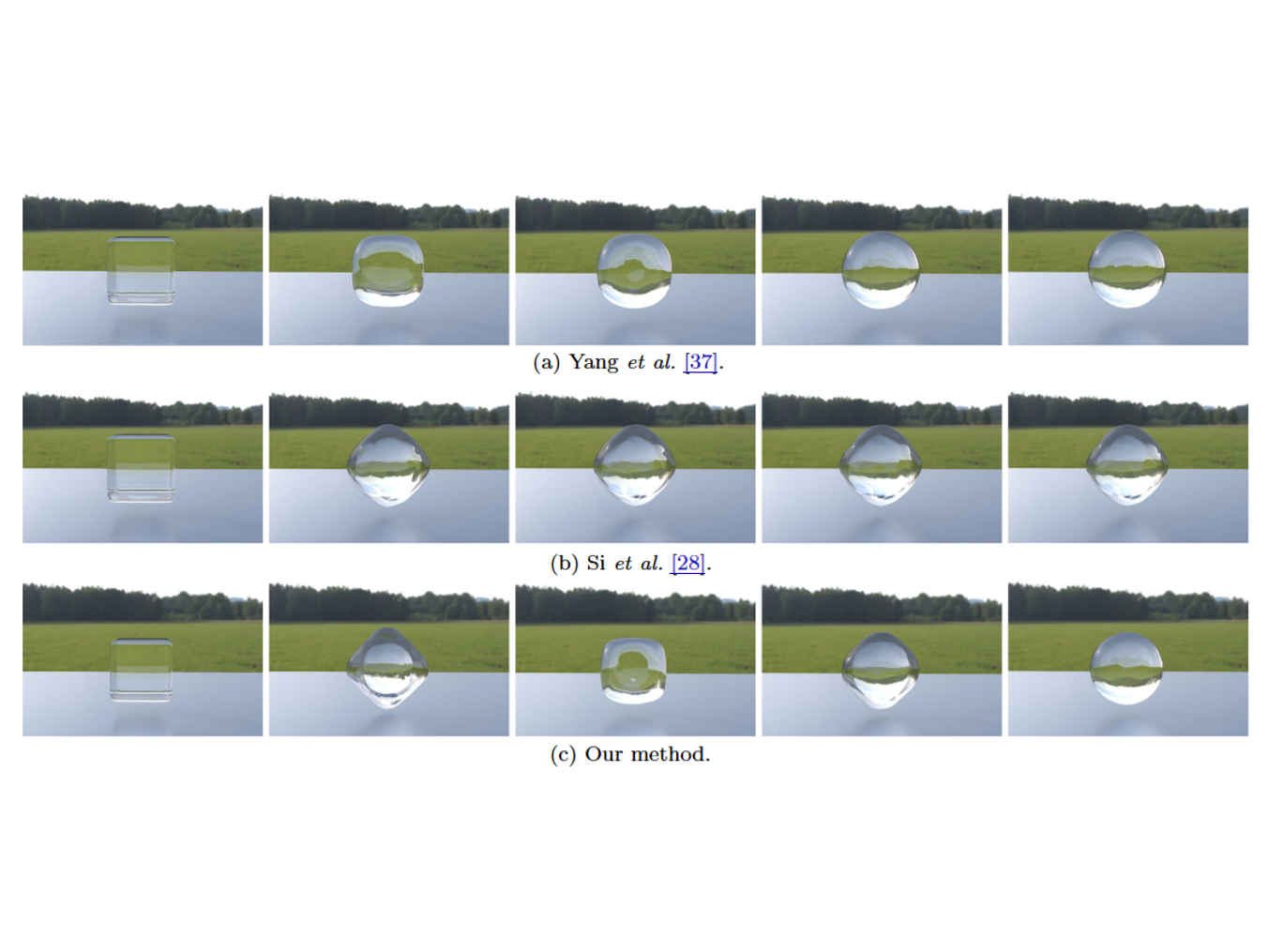
We present an innovative Lagrangian dual-mechanism model for simulating versatile surface tension phenomena, designed to replicate the intricate interplay of liquids with textured solid surfaces and the emergence of gas bubbles. This model synergistically merges the influence of inter-particle dynamics with global surface curvature, ensuring a harmonious balance between the intricacies of fluid motion and the imperative of surface area reduction. A cornerstone of our methodology is the incorporation of Laplace pressure differentials across fluid boundaries, enhancing interface stability and enabling the depiction of distinctive droplet oscillations driven by fluctuations in kinetic energy. Additionally, our model introduces a dual-scale smoothing kernel, meticulously engineered to resolve the subtle nuances of surface textures. The prowess of our model is exemplified in its ability to simulate superhydrophobic behaviors, underscoring its utility. Integrated within the smoothed particle hydrodynamics framework, our model offers efficient simulation performance, contributing a valuable tool to the field of fluid simulation
Monte Carlo Vortical Smoothed Particle Hydrodynamics for Simulating Turbulent Flows
Xingyu Ye, Xiaokun Wang, Yanrui Xu, and 5 more authors
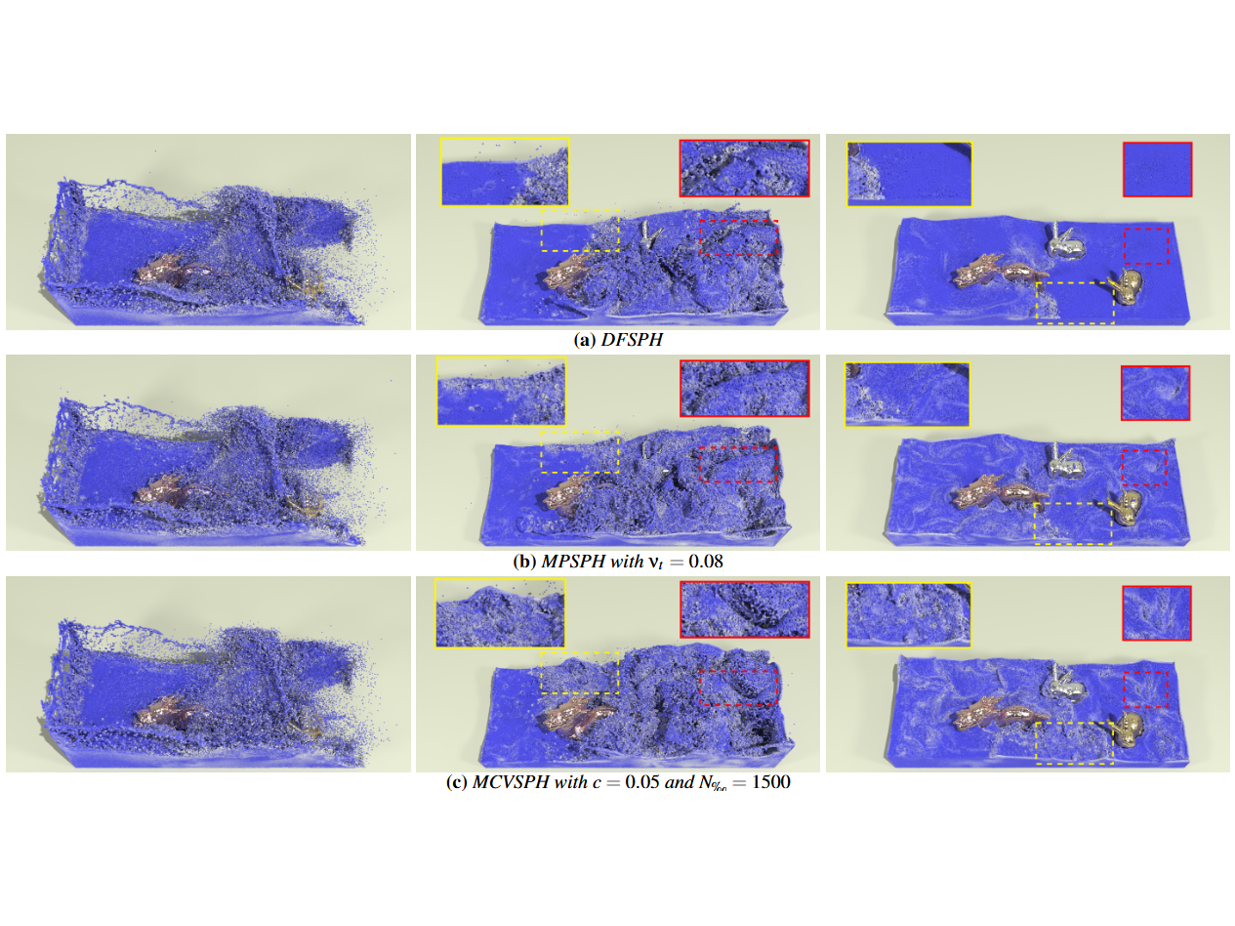
For vortex particle methods relying on SPH-based simulations, the direct approach of iterating all fluid particles to capture velocity from vorticity can lead to a significant computational overhead during the Biot-Savart summation process. To address this challenge, we present a Monte Carlo vortical smoothed particle hydrodynamics (MCVSPH) method for efficiently simulating turbulent flows within an SPH framework. Our approach harnesses a Monte Carlo estimator and operates exclusively within a pre-sampled particle subset, thus eliminating the need for costly global iterations over all fluid particles. Our algorithm is decoupled from various projection loops which enforce incompressibility, independently handles the recovery of turbulent details, and seamlessly integrates with state-of-the-art SPH-based incompressibility solvers. Our approach rectifies the velocity of all fluid particles based on vorticity loss to respect the evolution of vorticity, effectively enforcing vortex motions. We demonstrate, by several experiments, that our MCVSPH method effectively preserves vorticity and creates visually prominent vortical motions
Physics-Based Fluid Simulation in Computer Graphics: Survey, Research Trends, and Challenges
Xiaokun Wang, Yanrui Xu, Sinuo Liu, and 9 more authors
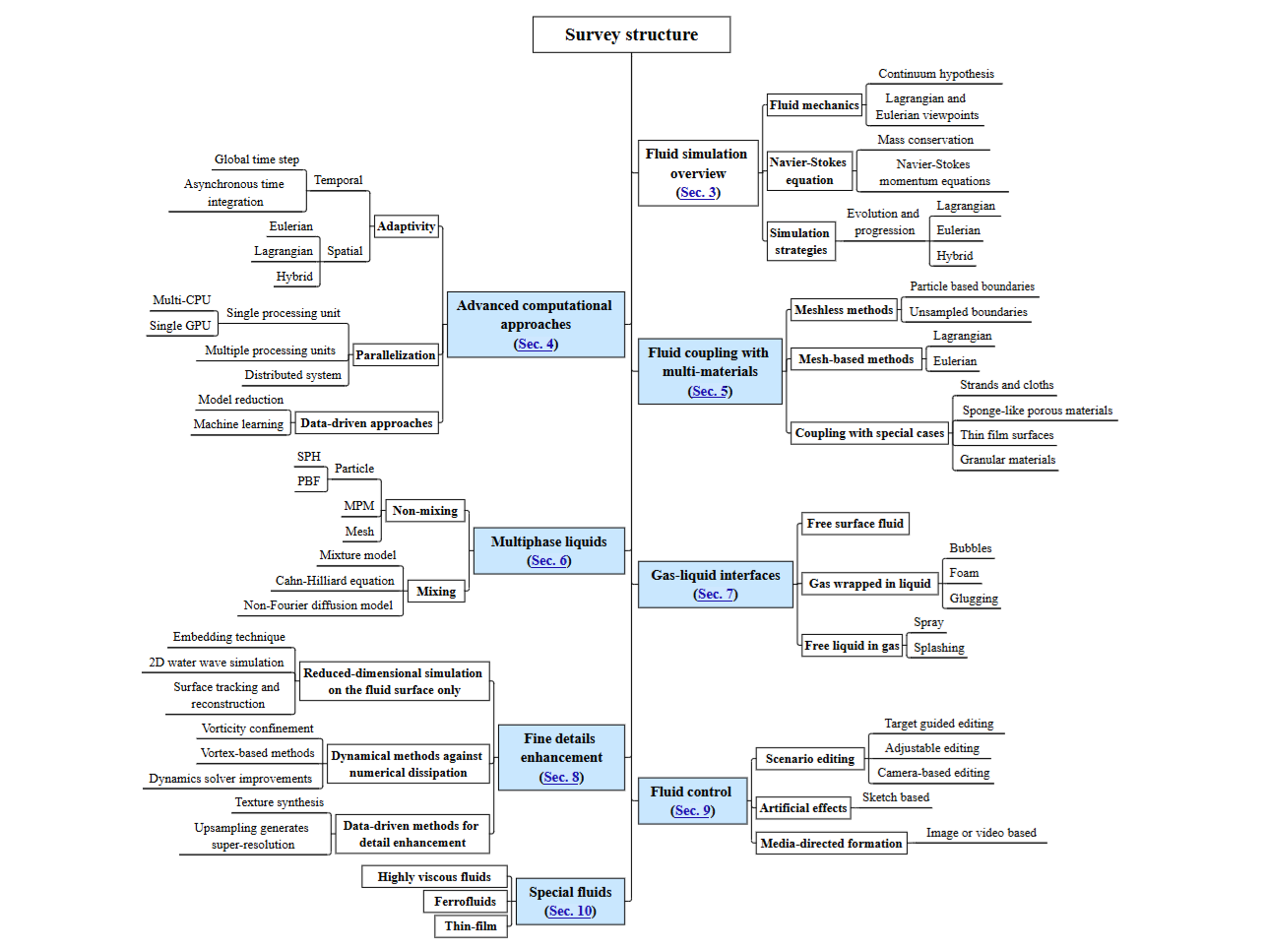
Physics-based fluid simulation has played an increasingly important role in the computer graphics community. Recent methods in this area have greatly improved in generating complex visual effects and also in computational efficiency. Novel techniques have emerged to deal with complex boundaries, multiphase fluids, gas-liquid interfaces, and fine details. In parallel, the combined use of machine learning, image processing, and fluid control technologies has brought many interesting and novel research perspectives. In this survey, we provide an introduction to theoretical concepts underpinning physics-based fluid simulation and their practical implementation with the aim to serve as a guide for both newcomer and seasoned researchers for exploring the physics-based fluid simulation field, with a focus on recent developments in the last decade. Driven by the distribution of recent publications in the field, we structure our survey to cover physical background, discretization approaches, computational methods that address scalability, fluid interactions with other materials and interfaces, and methods for expressive aspects of surface detail and control. From a practical perspective, we overview existing implementations available for the above methods
2023
An Implicitly Stable Mixture Model for Dynamic Multi-Fluid Simulations
Yanrui Xu, Xiaokun Wang, Jiamin Wang, and 8 more authors
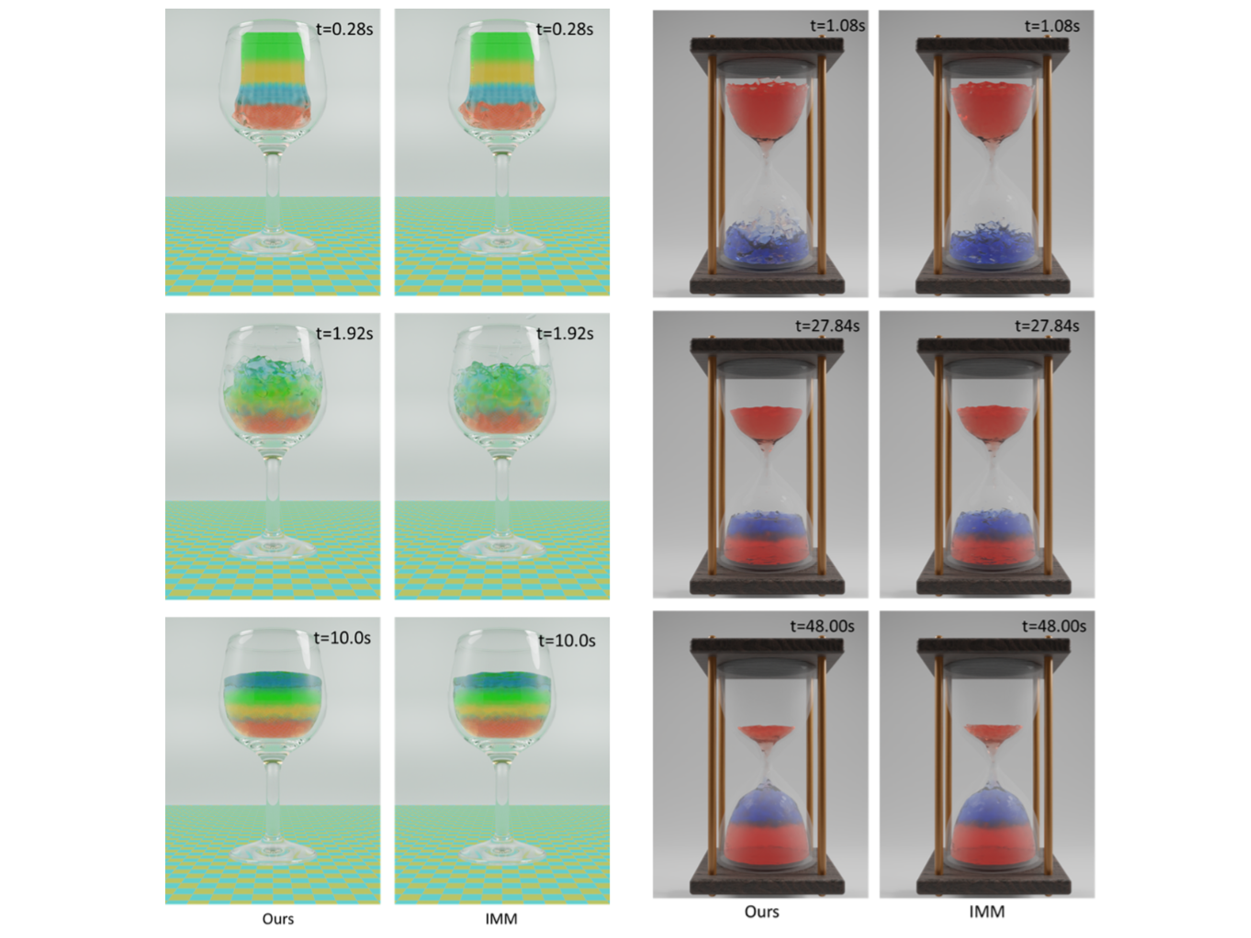
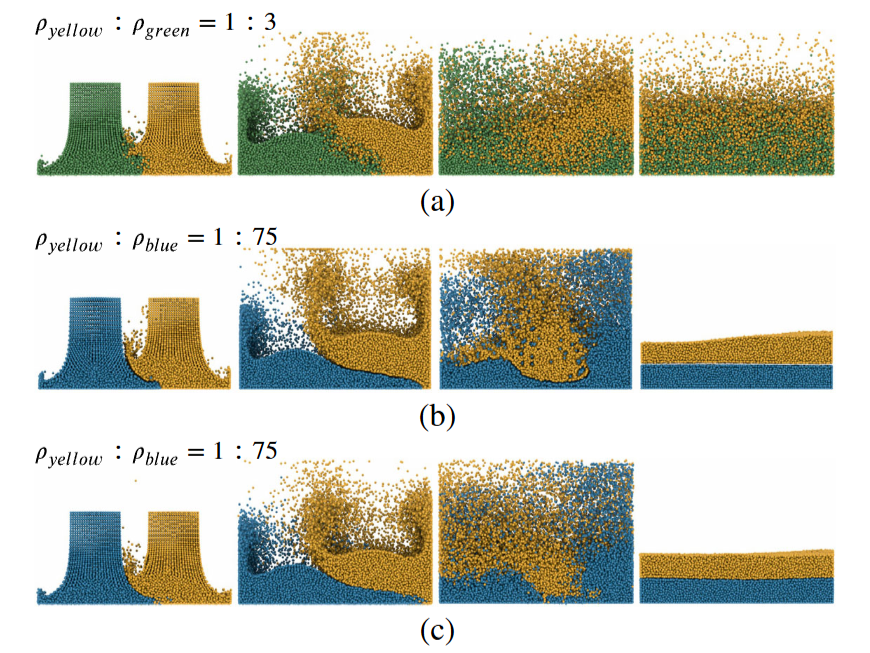
Particle-based simulations have become increasingly popular in real-time applications due to their efficiency and adaptability, especially for generating highly dynamic fluid effects. However, the swift and stable simulation of interactions among distinct fluids continues to pose challenges for current mixture model techniques. When using a single-mixture flow field to represent all fluid phases, numerical discontinuities in phase fields can result in significant losses of dynamic effects and unstable conservation of mass and momentum. To tackle these issues, we present an advanced implicit mixture model for smoothed particle hydrodynamics. Instead of relying on an explicit mixture field for all dynamic computations and phase transfers between particles, our approach calculates phase momentum sources from the mixture model to derive explicit and continuous velocity phase fields. We then implicitly obtain the mixture field using a phase-mixture momentum-mapping mechanism that ensures conservation of incompressibility, mass, and momentum. In addition, we propose a mixture viscosity model and establish viscous effects between the mixture and individual fluid phases to avoid instability under extreme inertia conditions. Through a series of experiments, we show that, compared to existing mixture models, our method effectively improves dynamic effects while reducing critical instability factors. This makes our approach especially well-suited for long-duration, efficiency-oriented virtual reality scenarios
Simulating Hyperelastic Materials with Anisotropic Stiffness Models in a Particle-Based Framework
Tiancheng Wang, Yanrui Xu, Ruolan Li, and 3 more authors
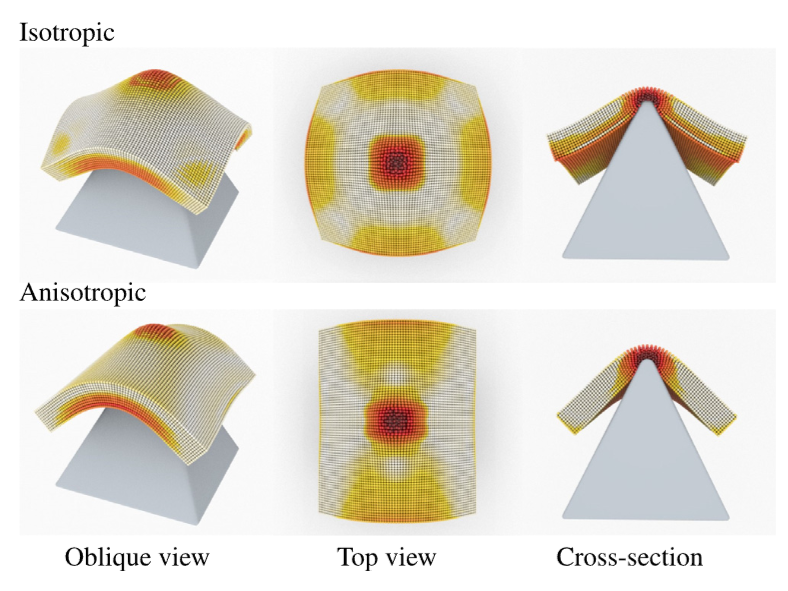
We present a particle-based smoothed particle hydrodynamics (SPH) framework for simulating hyperelastic materials with anisotropic stiffness models. While most elastic simulations predominantly rely on mesh-based approaches, such as the Finite Element method, the relationship between Lamé’s first parameter and Poisson’s ratio complicates the strict enforcement of volume conservation, making it challenging to stabilize simulations for common biological tissues like fat and muscle. In this paper, we couple an implicit divergence-free SPH solver with particle-based deformation gradient computation and apply various elastic energy functions to achieve incompressible elastic simulations. The incompressibility of elastic objects and collisions between different bodies are managed by the implicit SPH algorithm. We further incorporate anisotropic energy functions, constructed from the extrapolation of Cauchy–Green invariants, to introduce anisotropic properties to the objects. By integrating activation and contraction coefficients into the energy functions, particles can simulate muscle contractions and lift heavy objects. Our method can effectively represent elastic objects with varying mechanical properties across different directions and be further employed to mimic muscle contractions. Experiments demonstrate that our approach provides realistic simulations for a wide range of animal and human body movements
Efficient and High Precision Target-Driven Fluid Simulation Based on Spatial Geometry Features
Xiangyang Zhou, Sinuo Liu, Haokai Zeng, and 2 more authors
We proposed a novel target-driven fluid simulation method based on the weighted control model derived from the spatial geometric features of the target shape. First, the spatial geometric characteristics of the target model are taken into account to set the color field weights of control particles. This enabled the full expression of geometric characteristics of the target model, and improve the shape accuracy of controlled fluid. Then, the fluid is controlled to form the target shape under driving constraints, wherein we proposed a new adaptive constraint mechanism that enables efficient target shape generation. Finally, a new density constraint between the control particles and the controlled fluid particles is proposed to ensure the incompressibility of fluid during control. Compared to the state-of-the-art target-driven fluid control methods, our method achieves higher precision fluid control with higher efficiency
HandDGCL: Two-Hand 3D Reconstruction Based Disturbing Graph Contrastive Learning
Bing Han, Chao Yao, Xiaokun Wang, and 2 more authors
Jun 2023
hand shape reconstructiongraph contrastive learninghand pose estimation
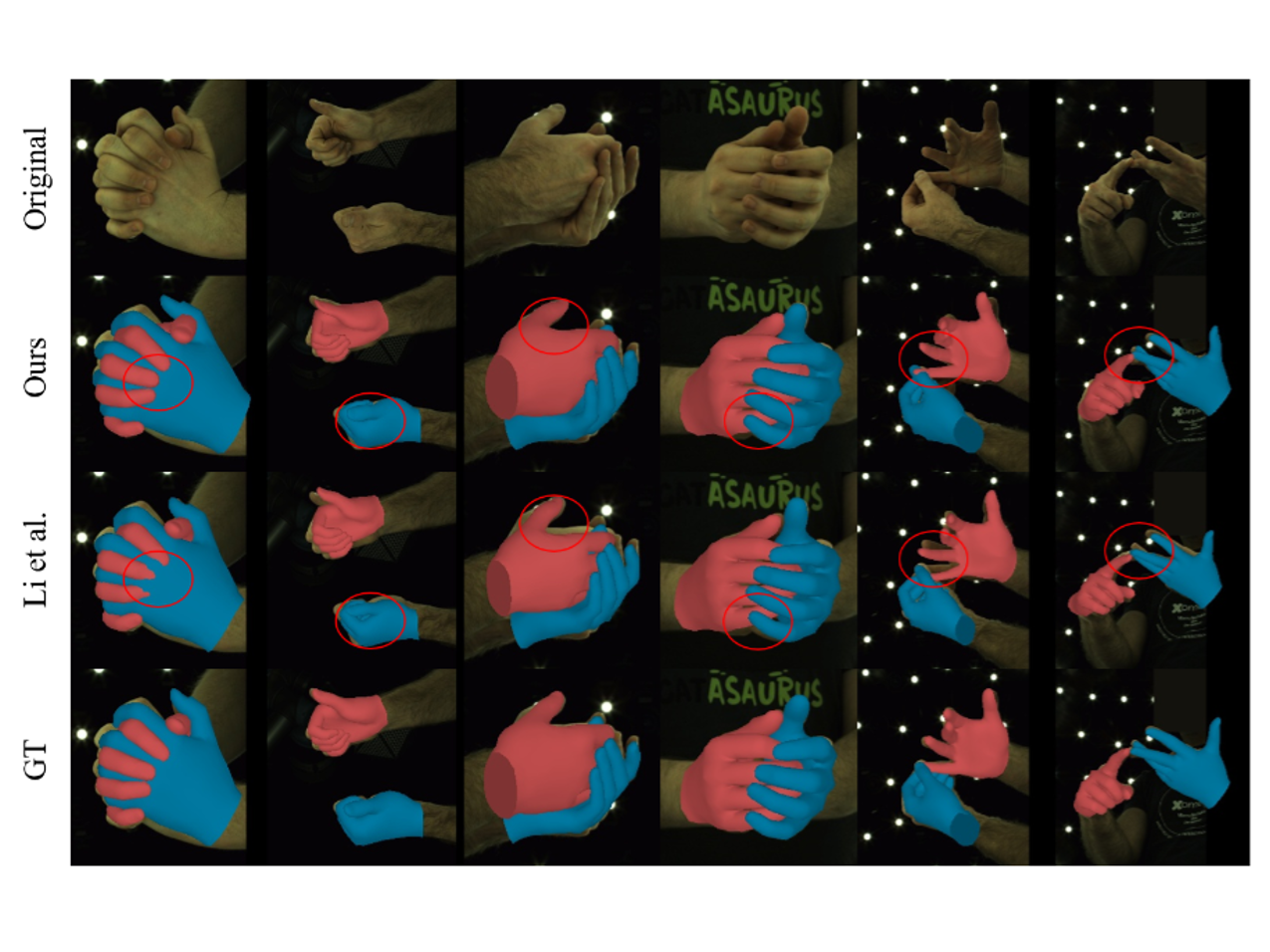
Virtual Reality (VR) and Augmented Reality (AR) applications are becoming increasingly prevalent. However, constructing realistic 3D hands, especially when two hands are interacting, from a single RGB image remains a major challenge due to severe mutual occlusion and the enormous diversity of hand poses. In this paper, we propose a Disturbing Graph Contrastive Learning strategy for two-hand 3D reconstruction. This involves a graph disturbance network designed to generate graph feature pairs to enhance the consistency of the two-hand pose features. A contrastive learning module leverages high-quality generative features for a strong feature expression. We further propose a similarity distinguish method to divide positive and negative features for accelerating the model convergence. Additionally, a multi-term loss is designed to balance the relation among the hand pose, the visual scale and the viewpoint position. Our model has achieved State-of-the-Art results in the InterHand2.6M benchmark. Ablation studies show the model’s great ability to correct unreasonable hand movements. In subjective assessments, our Graph Disturbance Learning method significantly improves the construction of realistic 3D hands, especially when two hands are interacting
FluidPlaying: Efficient Adaptive Simulation for Highly Dynamic Fluid
Sinuo Liu, Xiaojuan Ban, Sheng Li, and 5 more authors
In 2023 IEEE Conference on Virtual Reality and 3D User Interfaces Abstracts and Workshops (VRW), Mar 2023
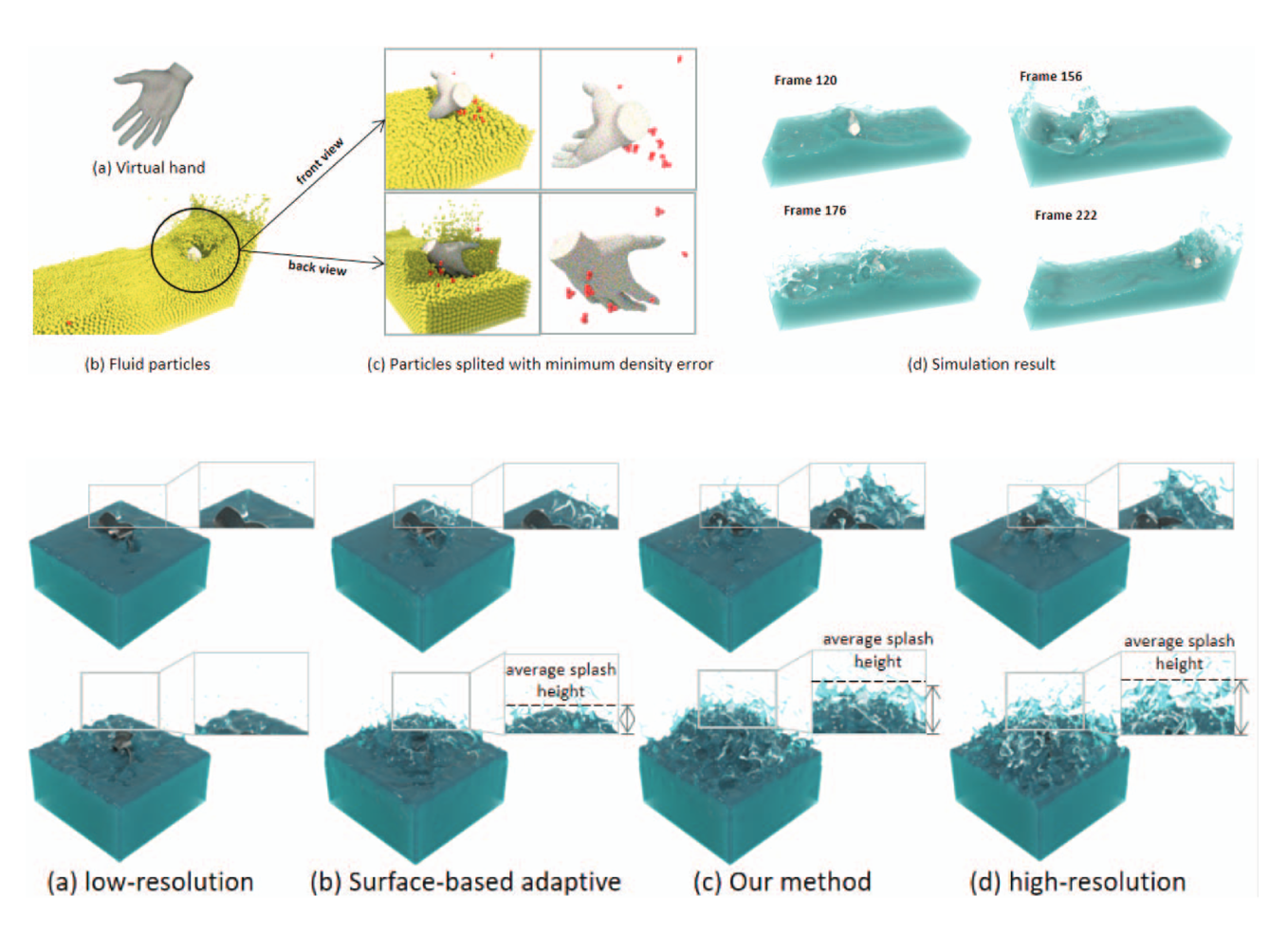
We present FliudPlaying, a novel dynamic level-based spatially adaptive simulation method that can handle highly dynamic fluid efficiently. To capture the subtle detail of the fluid surface, the high-resolution simulation is performed not only at the free surface but also at those regions with high vorticity levels and velocity difference levels. To minimize the density error, an online optimization scheme is used when increasing the resolution by particle splitting. We also proposed a neighbor-based splash enhancement to compensate for the loss of dynamic details. Compared with the high-resolution simulation baseline, our method can achieve over 3× speedups while consuming only less than 10% computational resources. Furthermore, our method can make up for the loss of high-frequency details caused by the spatial adaptation, and provide more realistic dynamics in particle-based fluid simulation
Implicit Smoothed Particle Hydrodynamics Model for Simulating Incompressible Fluid-Elastic Coupling
Xiaokun Wang, Tiancheng Wang, Jiamin Wang, and 6 more authors
Computer Animation and Virtual Worlds, Mar 2023
elastic simulationfluid-solid couplingmultiple fluid interactionparticle systemsphysically based animation
Fluid simulation has been one of the most critical topics in computer graphics for its capacity to produce visually realistic effects. The intricacy of fluid simulation manifests most with interacting dynamic elements. The coupling for such scenarios has always been challenging to manage due to the numerical instability arising from the coupling boundary between different elements. Therefore, we propose an implicit smoothed particle hydrodynamics fluid-elastic coupling approach to reduce the instability issue for fluid-fluid, fluid-elastic, and elastic-elastic coupling circumstances. By deriving the relationship between the universal pressure field with the incompressible attribute of the fluid, we apply the number density scheme to solve the pressure Poisson equation for both fluid and elastic material to avoid the density error for multi-material coupling and conserve the non-penetration condition for elastic objects interacting with fluid particles. Experiments show that our method can effectively handle the multiphase fluids simulation with elastic objects under various physical properties
Spatial Adaptivity with Boundary Refinement for Smoothed Particle Hydrodynamics Fluid Simulation
Yanrui Xu, Chongming Song, Xiaokun Wang, and 4 more authors
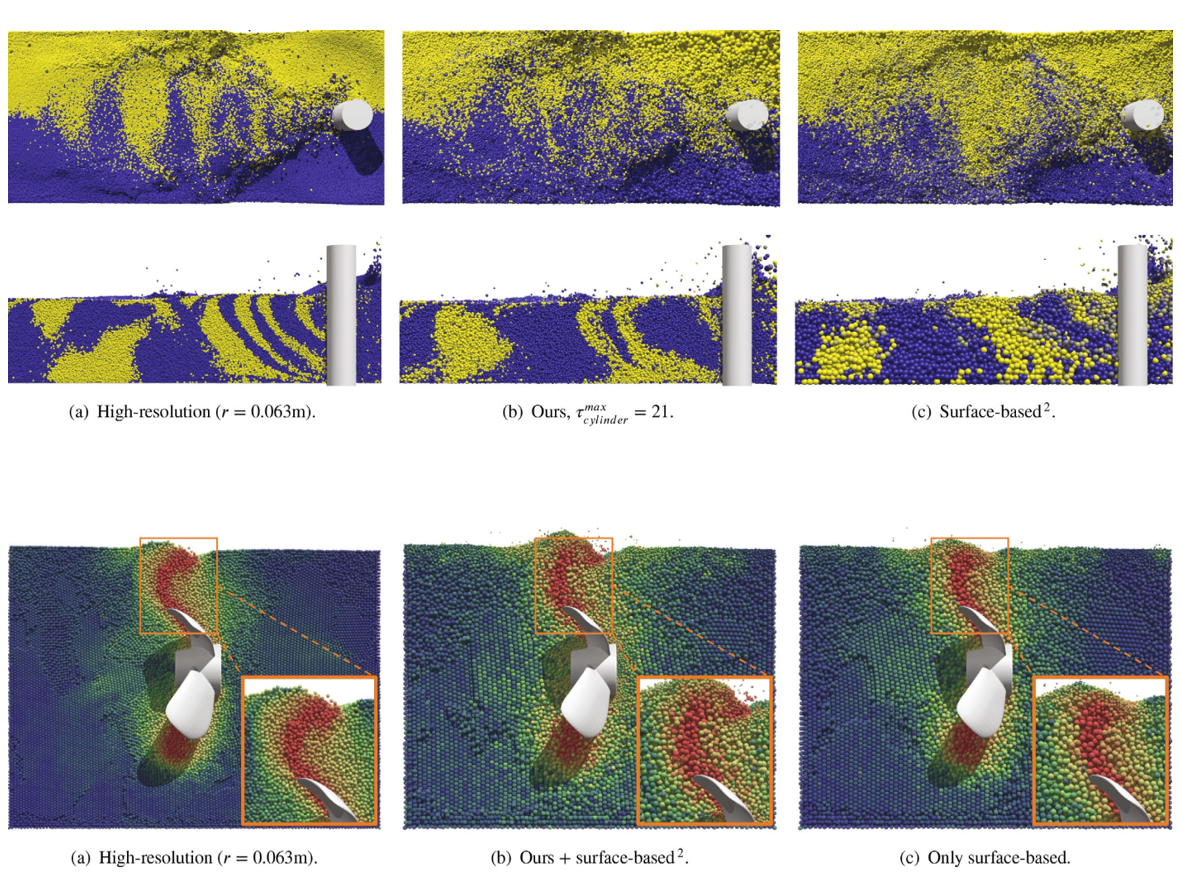
Fluid simulation is well-known for being visually stunning while computationally expensive. Spatial adaptivity can effectively ease the computational cost by discretizing the simulation space with varying resolutions. Adaptive methods nowadays mainly focus on the mechanism of refining the fluid surfaces to obtain more vivid splashes and wave effects. But such techniques hinder further performance gain under the condition where most of the vast fluid surface is tranquil. Moreover, energetic flow beneath the surface cannot be adequately captured with the interior of the fluid still being simulated under coarse discretization. This article proposes a novel boundary-distance based adaptive method for smoothed particle hydrodynamics fluid simulation. The signed-distance field constructed with respect to the coupling boundary is introduced to determine particle resolution in different spatial positions. The resolution is maximal within a specific distance to the boundary and decreases smoothly as the distance increases until a threshold is reached. The sizes of the particles are then adjusted towards the resolution via splitting and merging. Additionally, a wake flow preservation mechanism is introduced to keep the particle resolution at a high level for a period of time after a particle flows through the boundary object to prevent the loss of flow details. Experiments show that our method can refine fluid–solid coupling details more efficiently and effectively capture dynamic effects beneath the surface
2022
Anisotropic Screen Space Rendering for Particle-Based Fluid Simulation
Yanrui Xu, Yuanmu Xu, Dou Yin, and 4 more authors
SSRN Electronic Journal, Dec 2022
Real-time renderingScreen space renderingFluid simulationSmoothed particle hydrodynamics
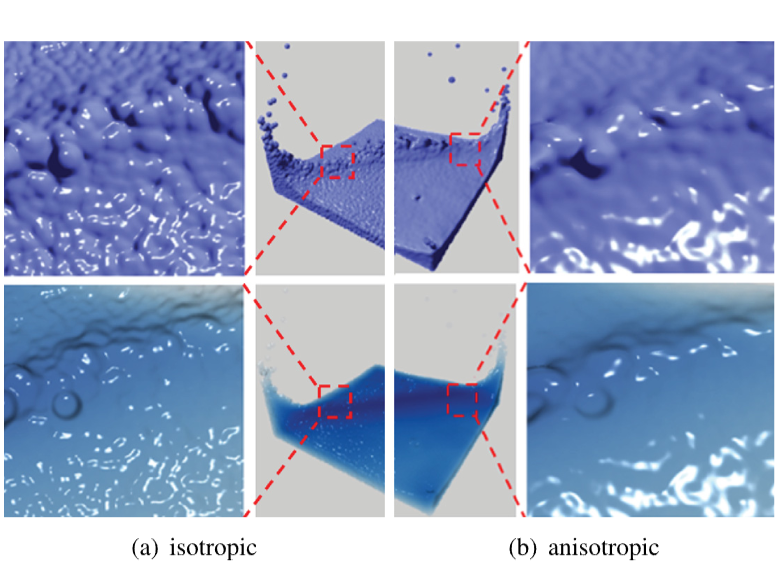
This paper proposes a real-time fluid rendering method based on the screen space rendering scheme for particle-based fluid simulation. Our method applies anisotropic transformations to the point sprites to stretch the point sprites along appropriate axes, obtaining smooth fluid surfaces based on the weighted principal components analysis of the particle distribution. Then we combine the processed anisotropic point sprite information with popular screen space filters like curvature flow and narrowrange filters to process the depth information. Experiments show that the proposed method can efficiently resolve the issues of jagged edges and unevenness on the surface that existed in previous methods while preserving sharp high-frequency details
Volume Flux Free SPH Approach for Multiphase Fluids
Yanrui Xu, Xiaokun Wang, Xiaojuan Ban, and 3 more authors
Journal of Computer-Aided Design & Computer Graphics, Dec 2022
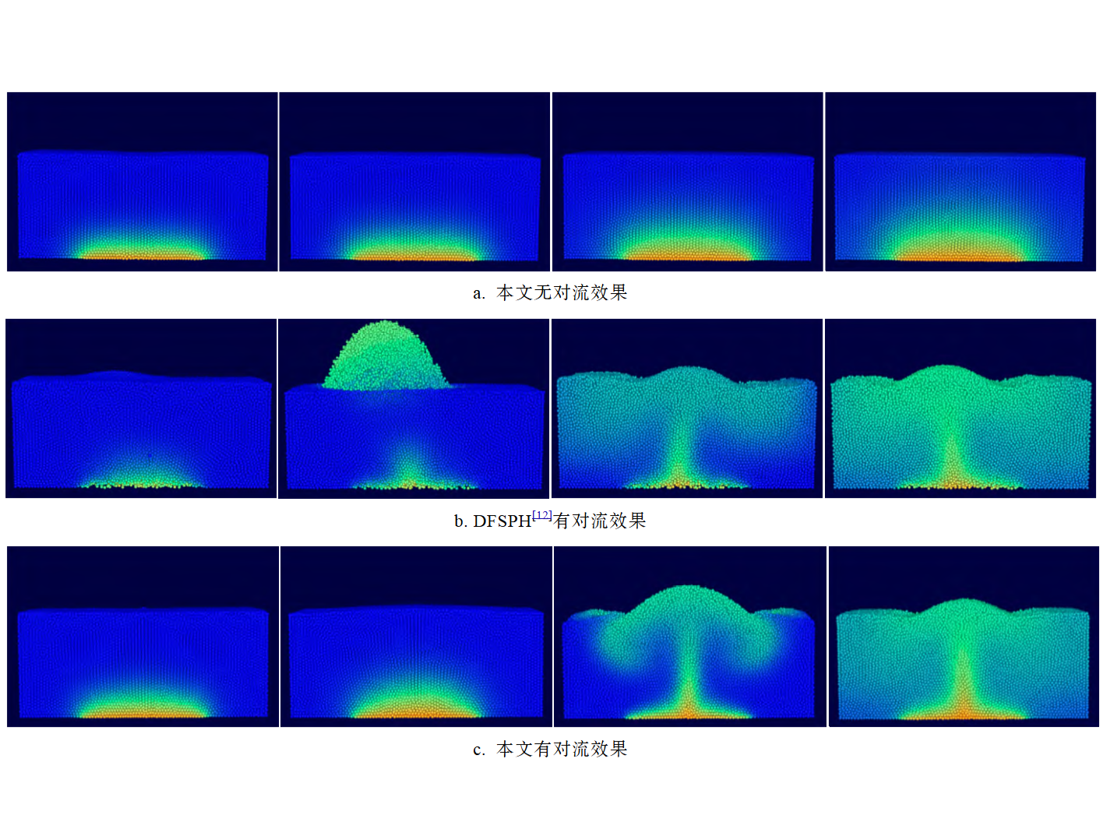
Aiming at the numerical issue at the interface during multiphase flow simulation with high density ratio and resulting unreasonable effect of convective motion, an implicit pressure algorithm based on volumetric flux free condition is proposed. Firstly, the causes of density approximation errors in the traditional multiphase flow simulation methods are analyzed. Secondly, the correlation calculation of “volume-compression ratio” is proposed to construct the linear relationship between fluid compression state and pressure. Thirdly, the constant volume solver and the volume flux free solver are designed respectively to realize the incompressibility of fluid volume and the divergence free of velocity field. In order to verify the performance of the proposed algorithm, the advanced fluid simulation method DFSPH is taken as comparison. And the rationality of simulation effect, numerical stability and convergence are taken as the qualitative and quantitative evaluation factors respectively. Experiments such as two-phase dam break and thermal convection are carried out under multiphase flow condition. The results show that the proposed method can achieve efficient and stable multiphase flow interaction. Under the same multiphase flow conditions, it can consume less calculation time and achieve convergence faster than DFSPH. It has good robustness, effectiveness and scalability in various complex simulation scenarios, especially suitable for simulating fluids with high density ratio
Indoor Visual Re-Localization for Long-Term Autonomous Robots Based on Object-Level Features and Semantic Relationships
Yuanyan Xie, Yu Guo, Zhenqiang Mi, and 3 more authors
IEEE Robotics and Automation Letters, Jan 2022
Localizationlong-term autonomymobile robotsRGB-D perceptionsemantic scene understanding
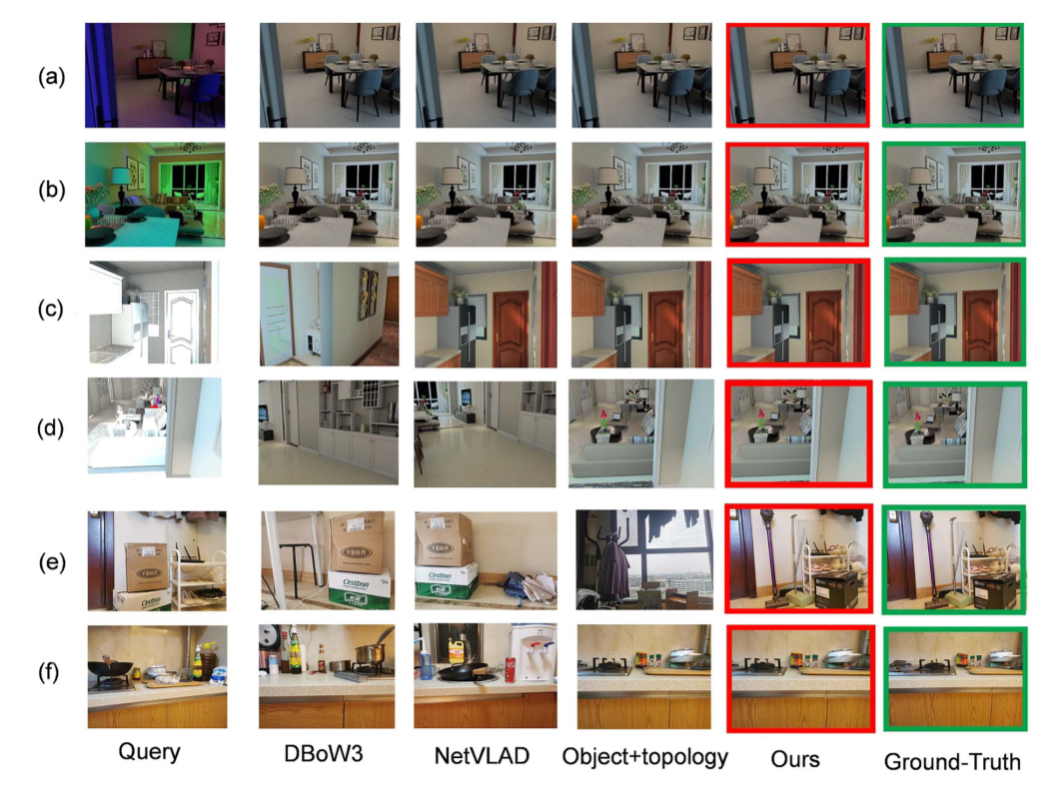
Visual re-localization has become one of the key technologies for long-term autonomous robots. Existing methods, mostly focusing on addressing day-night, weather, and seasonal changes, are not applicable in indoor scenarios. At the same time, the layouts of objects in indoor scenes are highly dynamic over time due to human interactions with the environment, which makes indoor re-localization challenging. This letter presents a novel indoor visual re-localization method for long-term autonomous robots. First, a scene graph model is proposed, incorporating object-level features and semantic relationships, which overcomes the influence of dynamic objects by understanding the interactions among objects. Then, a visual re-localization method is developed based on the proposed scene graph model. It adopts graph matching technologies to incorporate pairwise object interactions as important features for re-localization, and designs a feature reweighting strategy to further reduce the impact of outliers in dynamic scenes. The proposed re-localization method has been verified in both photorealistic simulation environments and real-world scenarios. The resultsshowthatourapproachexhibitshigherrobustnesstodiverse
2021
Silicone Oil-Water Interaction and Emulsification Visual Simulation for Intraocular Silicone Oil Tamponade
Chongming Song, Yanrui Xu, Xiaokun Wang, and 4 more authors
In 2021 IEEE International Conference on Bioinformatics and Biomedicine (BIBM), Dec 2021
Medical visualizationRhegmatogenous retinal detachmentSilicone oil tamponadeMultiphase flows simulation
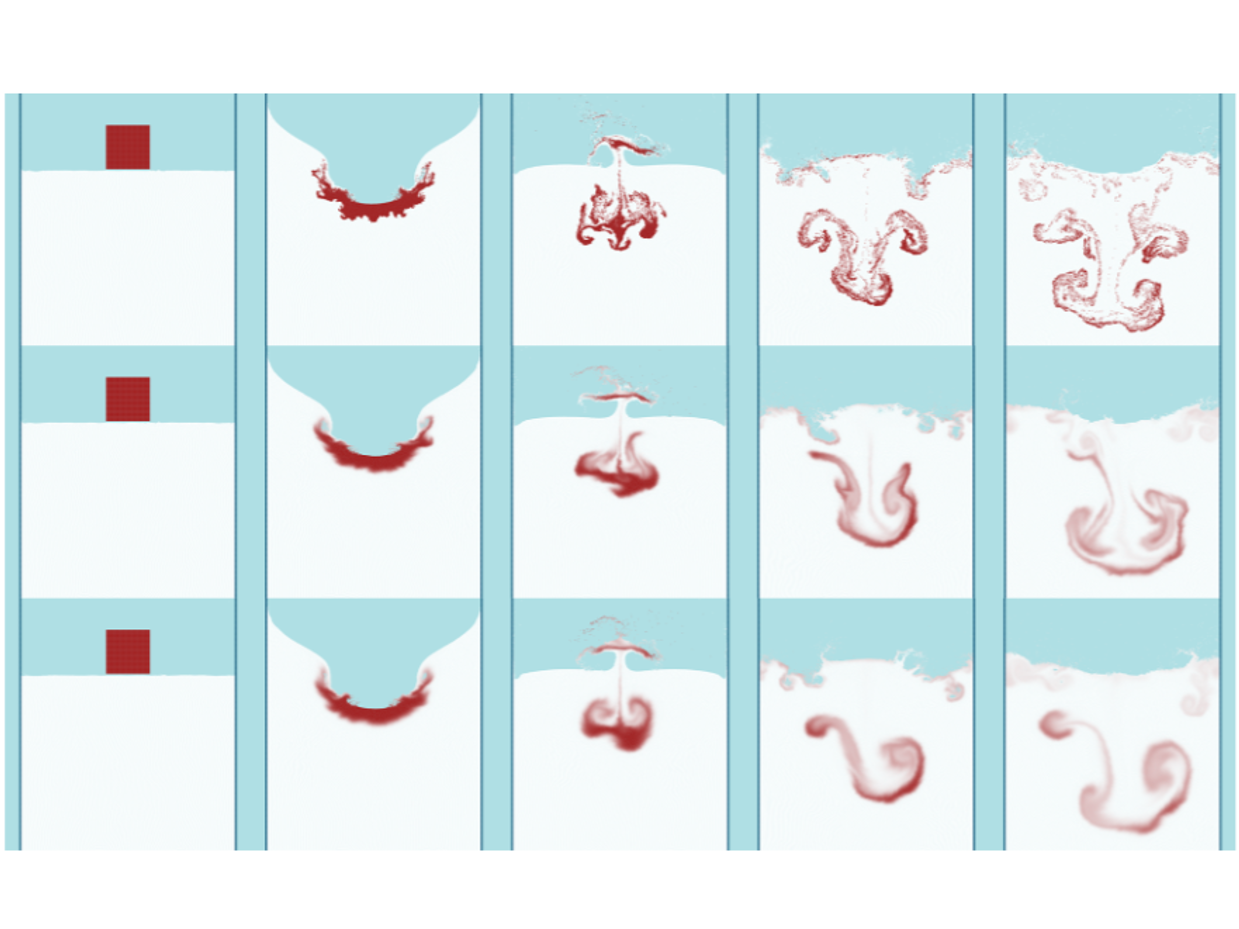
Vitrectomy combined with silicone oil tamponade is an effective treatment for rhegmatogenous retinal detachment (RRD). The high viscosity and surface tension of the silicone oil make it suitable for treating large retinal tears by pressing against the retina. However, silicone oil becomes emulsified over time as it remains in the eye, which can cause serious complications. Clear visual acquisitions of silicone oil-water interaction and silicone oil emulsification progress are difficult during and after the surgery. To help doctors and patients perceive the two-phase interaction and emulsification progress intuitively, we propose a physically based simulation method for intraocular silicone oil visualization. For the visualization of immiscible silicone oil-water interaction, we introduce a volume-incompressible Smoothed Particle Hydrodynamics (SPH) approach to improve simulation precision of multiphase flow coupling. A diffusion model based on volume fraction is proposed to visualize emulsification progress. Additionally, we combine our method with cohesion and surfaceminimization driven surface tension model to describe the high surface tension of silicone oil. Experiments show that our scheme can obtain a precise pressure gradient near phase boundary and perform noticeable mixing effect that evolves over time. Our method has the advantage of higher accuracy than other visualization methods, and has the potential to help doctors make decisions and estimate surgical outcomes
Simulation and Visualization of Solid-Liquid Phase Transition and Interactive using Particle-Based Method
Zihao Liu, Yanrui Xu, Xiaokun Wang, and 2 more authors
In 2021 International Conference on Communications, Computing, Cybersecurity, and Informatics (CCCI), Oct 2021
fluid simulation and visualizationsolidliquid transitionheat conduction
The simulation and visualization of natural phenomena has been widely studied in computer graphics. But those studies are less involved in complex phenomena, such as solid-liquid interaction and transition. We propose a method for simulation and visualization of solid-liquid heat conduction and phase transition using Smooth Particle Hydrodynamics(SPH) based on Fourier law. To achieve a realistic phase transition, spatio-temporal discretization of solid-liquid two-phase material, we map the temperature field to solid and liquid particles and combining with the heat conduction model. Our method includes heat conduction between solid and liquid, solid and surrounding air, and latent heat caused by phase transition. The experimental results show that our method can realize stable heat conduction and smooth phase transition from solid to liquid with accurate simulation details and visualization effects
2020
Robust Turbulence Simulation for Particle-Based Fluids using the Rankine Vortex Model
Xiaokun Wang, Sinuo Liu, Xiaojuan Ban, and 3 more authors
We propose a novel turbulence refinement method based on the Rankine vortex model for smoothed particle hydrodynamics (SPH) simulations. Surface details are enhanced by recovering the energy lost due to the lack of the rotation of SPH particles. The Rankine vortex model is used to convert the diffused and stretched angular kinetic energy of particles to the linear kinetic energy of their neighbors. In previous vorticity-based refinement methods, adding more energy than required by the viscous damping effect leads to instability. In contrast, our model naturally prevents the positive feedback effect between the velocity and vorticity fields since the vortex model is designed to alter the velocity without introducing external sources. Experimental results show that our method can recover missing high-frequency details realistically and maintain convergence in both static and highly dynamic scenarios
Turbulent Details Simulation for SPH Fluids via Vorticity Refinement
Sinuo Liu, Xiaokun Wang, Xiaojuan Ban, and 4 more authors
A major issue in Smoothed Particle Hydrodynamics (SPH) approaches is the numerical dissipation during the projection process, especially under coarse discretizations. High-frequency details, such as turbulence and vortices, are smoothed out, leading to unrealistic results. To address this issue, we introduce a Vorticity Refinement (VR) solver for SPH fluids with negligible computational overhead. In this method, the numerical dissipation of the vorticity field is recovered by the difference between the theoretical and the actual vorticity, so as to enhance turbulence details. Instead of solving the Biot-Savart integrals, a stream function, which is easier and more efficient to solve, is used to relate the vorticity field to the velocity field. We obtain turbulence effects of different intensity levels by changing an adjustable parameter. Since the vorticity field is enhanced according to the curl field, our method can not only amplify existing vortices, but also capture additional turbulence. Our VR solver is straightforward to implement and can be easily integrated into existing SPH methods
2019
Recovering Turbulence Details using Velocity Correction for SPH Fluids
Xiaokun Wang, Sinuo Liu, Xiaojuan Ban, and 3 more authors
In general, kinetic energy of water molecules at translational rotational degree of freedoms (DOFs) occupies the dominant position. However, coarse space discretization always results in severe numerical dissipation if only the linear kinetic energy is considered. Therefore, we proposed a novel turbulence refinement method using velocity correction for SPH simulation. In this method, surface details were enhanced by recovering the energy lost in DOFs for SPH particles. We used a free vortex model to convert particles’ diffused and stretched angular kinetic energy to its neighbours’ linear kinetic energy. Turbulence details would be efficiently generated using the shear between slices. Compared with previous methods, our method can generate turbulence and vortex more vividly and stably
We proposed a detail refinement method to enhance the visual effect of turbulence in irrotational vortex. We restore the missing angular velocity from the particles and convert them into linear velocity to recover turbulent detail due to numerical disspation
A Unified Multiple-Phase Fluids Framework using Asymmetric Surface Extraction and the Modified Density Model
Xiaokun Wang, Yanrui Xu, Xiaojuan Ban, and 2 more authors
Symmetry, Jun 2019
3D visualizationfluid simulationmultiphase fluidssurface extraction
Multiple-phase fluids’ simulation and 3D visualization comprise an important cooperative visualization subject between fluid dynamics and computer animation. Interactions between different fluids have been widely studied in both physics and computer graphics. To further the study in both areas, cooperative research has been carried out; hence, a more authentic fluid simulation method is required. The key to a better multiphase fluid simulation result is surface extraction. Previous works usually have problems in extracting surfaces with unnatural fluctuations or detail missing. Gaps between different phases also hinder the reality of simulation. In this paper, we propose a unified surface extraction approach integrated with a modified density model for the particle-based multiphase fluid simulation. We refine the original asymmetric smoothing kernel used in the color field and address a binary tree scheme for surface extraction. Besides, we employ a multiphase fluid framework with modified density to eliminate density deviation between different fluids. With the methods mentioned above, our approach can effectively reconstruct the fluid surface for particle-based multiphase fluid simulation. It can also resolve the issue of overlaps and gaps between different fluids, which has widely existed in former methods for a long time. The experiments carried out in this paper show that our approach is able to have an ideal fluid surface condition and have good interaction effects
MIPOSE: A Micro-Intelligent Platform for Dynamic Human Pose Recognition
Zhishuai Han, Xiaojuan Ban, Xiaokun Wang, and 1 more author
In Proceedings of Asian CHI Symposium 2019: Emerging HCI Research Collection, May 2019
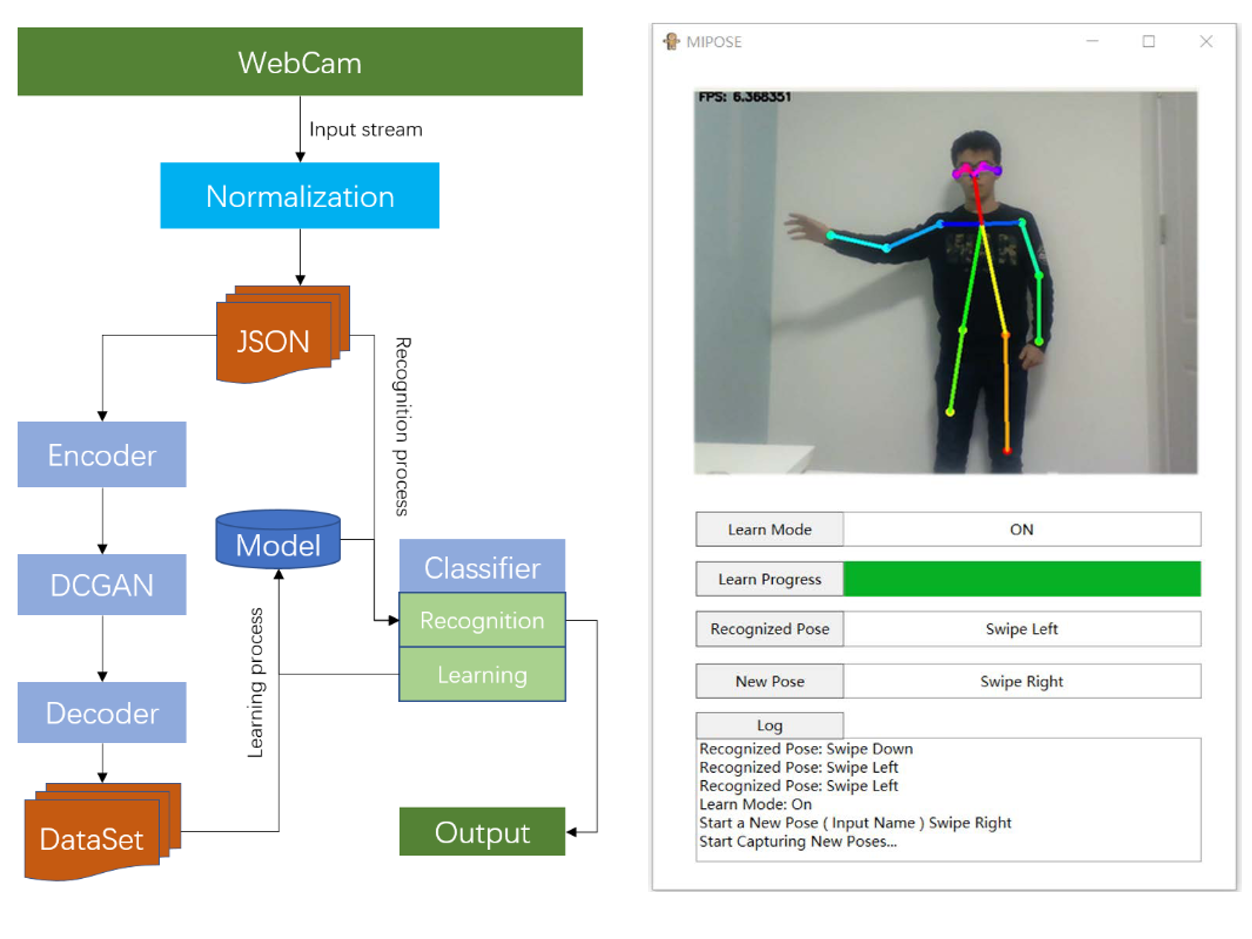
Giving computers the ability to learn from demonstrations is important for users to perform complex tasks. In this paper, we present an intelligent self-learning interface for dynamic human pose recognition. We capture 20 samples for an unknown pose to train a stable generative adversarial networks (GAN) system which aims to conduct data enhancement, then we adopt a threshold isolation method to distinguish relatively similar poses. A few minutes of learning time is sufficient to train a GAN system to successfully generate qualified pose samples. Our platform provides a feasible scheme for micro-intelligent interface, which can benefit to human-robot interaction greatly
Viscosity-Based Vorticity Correction for Turbulent SPH Fluids
Sinuo Liu, Xiaokun Wang, Xiaojuan Ban, and 3 more authors
In 2019 IEEE Conference on Virtual Reality and 3D User Interfaces (VR), Mar 2019
A critical problem of Smooth Particle Hydrodynamics SPH methods is the numerical dissipation in viscosity computation. This leads to unrealistic results where high frequency details, like turbulence, are smoothed out. To address this issue, we introduce a viscosity-based vorticity correction scheme for SPH fluids, without complex time integration or limited time steps. In our method, the energy difference in viscosity computation is used to correct the vorticity field. Instead of solving Biot-Savart integrals, we adopt stream function, which is easier to solve and more efficient, to recover the velocity field from the vorticity difference. Our method can increase the existing vortex significantly and generate additional turbulence at potential position. Moreover, it is simple to implement and can be easily integrated with other SPH methods
2018
Robust and Customized Methods for Real-Time Hand Gesture Recognition Under Object-Occlusion
Zhishuai Han, Xiaojuan Ban, Xiaokun Wang, and 1 more author
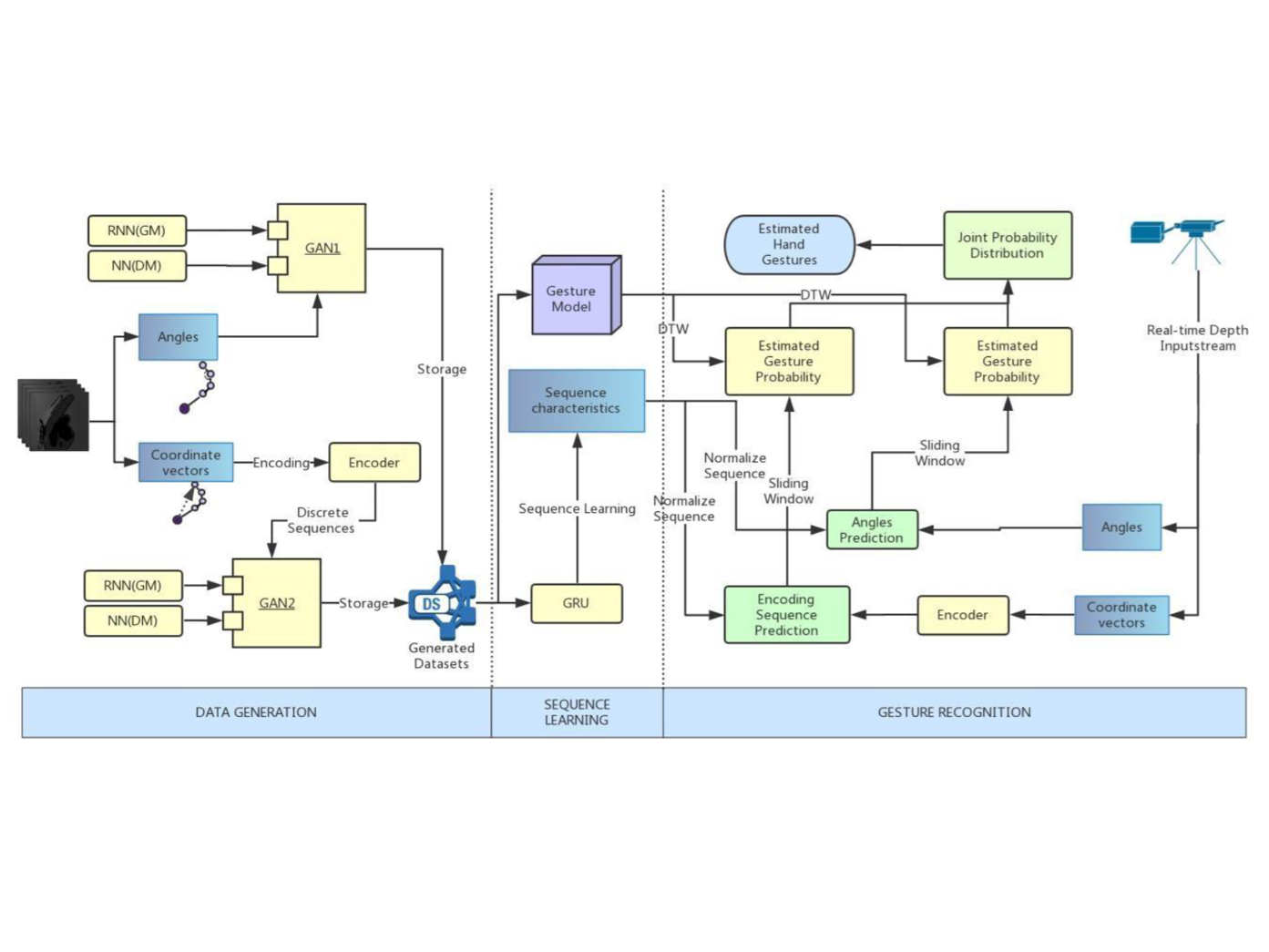
Dynamic hand tracking and gesture recognition is a hard task since there are many joints on the fingers and each joint owns many degrees of freedom. Besides, object occlusion is also a thorny issue in finger tracking and posture recognition. Therefore, we propose a robust and customized system for realtime hand tracking and gesture recognition under occlusion environment. First, we model the angles between hand keypoints and encode their relative coordinate vectors, then we introduce GAN to generate raw discrete sequence dataset. Secondly we propose a time series forecasting method in the prediction of defined hand keypoint location. Finally, we define a sliding window matching method to complete gesture recognition. We analyze 11 kinds of typical gestures and show how to perform gesture recognition with the proposed method. Our work can reach state of the art results and contribute to build a framework to implement customized gesture recognition task
Small-Scale Surface Details Simulation using Divergence-Free SPH
Xiaokun Wang, Xiaojuan Ban, Sinuo Liu, and 2 more authors
To realistic and efficient capture of microscopic features of fluid surface, we proposed a novel method for creating small-scale surface details. In this paper we introduced a surface tension and adhesion model to simulate surface details, which refined the cohesion term and area minimization term. It modified the calculation of surface tension and adhesion and enlarged the support length for cohesion, which makes the microscopic characteristics of surface details more visible. In addition, we integrated this model with a Divergence-free SPH method which fulfills constant density condition and divergence-free condition simultaneously. The experimental results show that our method can well simulate small-scale details of fluid surface in various scenarios meanwhile improves the computational stability and efficiency
Fluid-Solid Boundary Handling using Pairwise Interaction Model for Non-Newtonian Fluid
Xiaokun Wang, Xiaojuan Ban, Runzi He, and 3 more authors
In order to simulate fluid-solid boundary interaction for non-Newtonian Smoothed Particle Hydrodynamics (SPH) fluids, we present a steady and realistic fluid-solid boundary handling method using symmetrical interaction forces. Firstly, we use the improved SPH method to model the non-Newtonian fluid. Secondly, the density of boundary particle is created into the calculation of fluid-solid interaction forces. Besides, we apply friction conditions to constrain the fluid particles at the boundary. Finally, we apply the predictive-corrective scheme to correct the density deviation and improve boundary computing efficiency. The experiment confirms the feasibility for the interaction between non-Newtonian fluid and solid objects with this method. At the same time, it reflects the viscous characteristics and ensures the physical properties of non-Newtonian fluid. In addition, compared to existing methods, this method is more stable and easier to implement
A Symmetric Particle-Based Simulation Scheme towards Large Scale Diffuse Fluids
Sinuo Liu, Xiaojuan Ban, Ben Wang, and 1 more author
We present a symmetric particle simulation scheme for diffuse fluids based on the Lagrangian Smoothed Particle Hydrodynamics (SPH) model. In our method, the generation of diffuse particles is determined by the entropy of fluid particles, and it is calculated by the velocity difference and kinetic energy. Diffuse particles are generated near the qualified diffuse particle emitters whose diffuse material generation rate is greater than zero. Our method fits the laws of physics better, as it abandons the common practice of adding diffuse materials at the crest empirically. The coupling between diffuse materials and fluid is a post-processing step achieved by the velocity field, which enables the avoiding of the time-consuming process of cross finding neighbors. The influence weights of the fluid particles are assigned based on the degree of coupling. Therefore, it improved the accuracy of the diffuse particle position and made the simulation results more realistic. The approach is appropriate for large scale diffuse fluid, as it can be easily integrated in existing SPH simulation methods and the computational overhead is negligible
Adaptively Stepped SPH for Fluid Animation Based on Asynchronous Time Integration
Xiaojuan Ban, Xiaokun Wang, Liangliang He, and 2 more authors
Neural Computing and Applications, Jan 2018
Fluid simulationAdaptive SPHIndividual time stepsAsynchronous
We present a novel adaptive stepping scheme for SPH fluids, in which particles have their own time steps determined from local conditions, e.g. courant condition. These individual time steps are constrained for global convergence and stability. Fluid particles are then updated asynchronously. The approach naturally allocates computing resources to visually complex regions, e.g. regions with intense collisions, thereby reducing the overall computational time. The experiments show that our approach is more efficient than the standard method and the method with globally adaptive time steps, especially in highly dynamic scenes
2017
Surface Tension Model Based on Implicit Incompressible Smoothed Particle Hydrodynamics for Fluid Simulation
Xiaokun Wang, Xiaojuan Ban, Yalan Zhang, and 2 more authors
Journal of Computer Science and Technology, Dec 2017
In order to capture stable and realistic microscopic features of fluid surface, a surface tension and adhesion method based on implicit incompressible SPH (smoothed particle hydrodynamics) is presented in this paper. It gives a steady and fast tension model and can solve the problem of not considering adhesion. Molecular cohesion and surface minimization are considered for surface tension, and adhesion is added to show the microscopic characteristics of the surface. To simulate surface tension and adhesion stably and efficiently, the surface tension and adhesion model is integrated to an implicit incompressible SPH method. The experimental results show that the method can better simulate surface features in a variety of scenarios compared with previous methods and meanwhile ensure stability and efficiency
Anisotropic Surface Reconstruction for Multiphase Fluids
Xiaokun Wang, Xiaojuan Ban, Yalan Zhang, and 2 more authors
In 2017 International Conference on Cyberworlds (CW), Nov 2017
Under particle-based framework, level set is generally defined for fluid surfaces and is integrated with marching cubes algorithm to extract fluid surfaces. In these methods, anisotropic kernels method has proven successful for reconstructing fluid surfaces with high quality. It can perfectly represent smooth surfaces, thin stream and sharp features of fluids compare to other methods. In this paper, we propose a novel approach to extend it to the simulation of multiphase fluids simulation. In order to ensure fine effects for both fluid surface and multiphase interface, we modify the calculation of original anisotropic kernels and address a binary tree strategy for reconstruction. Our method can extract fluid surfaces simply and effectively for particle-based multiphase simulation. It solved the problem of overlaps and gaps at multiphase interface that exist in traditional methods. The experimental results demonstrate that our method keep a good fluid surface and interface effects
An Improved Anisotropic Kernels Surface Reconstruction Method for Multiphase Fluid
Xiaojuan Ban, Lipeng Wang, Xiaokun Wang, and 1 more author
This paper improves the anisotropic kernels surface reconstruction method and apples it to multiphase immiscible fluid surface reconstruction. An unexpected phenomenon appears when using the anisotropic kernels surface reconstruction directly (e.g. the gap and overlap at the interface of multiphase fluid surface). We eliminate the gap by considering the neighbor particles of other phase fluid in the kernels function and eliminate the overlap by signed color field in the marching cube process. The improved method will be able to reconstruct a common surface at the interface of the multiphase fluid
Surface Tension Fluid Simulation with Adaptiving Time Steps
Xu Liu, Pengfei Ye, Xiaojuan Ban, and 1 more author
In Lecture Notes in Computer Science, Aug 2017
Surface tensionCooperative visualizationAdaptiving time stepsImplicit Incompressible SPH
In this article, a surface tension fluid simulation algorithm based on IISPH is proposed. Based on the SPH algorithm, the surface tension and the adhesion model are constructed to solve the problem about particle clustering, fluid surface area minimization and interaction between different particles. The method can make the simulation effect of fluid be more in line with the actual physical scene. Furthermore, an adaptive time-stepping method is added in the algorithm. The efficiency of the simulation is significantly improved compared to the constant time-stepping
A Predictive-Corrective SPH Method for Shear Thinning Non-Newtonian Fluid
Yalan Zhang, Xiaojuan Ban, Y Xu, and 1 more author
Journal of Computer-Aided Design & Computer Graphics, May 2017
The simulation for non-Newtonian fluid has been an important research topic in physically based fluid animation. In this paper, we propose a novel predictive-corrective algorithm for non-Newtonian fluid based on incompressible smoothed particle hydrodynamics (ISPH). First, the viscous liquid is modeled by a non-Newtonian fluid flow and the variable viscosity under shear stress is achieved using a viscosity model known as Cross model. Then, a predictive-corrective method is proposed, by correcting density error with individual stiffness parameters for each particle, to avoid tensile instability and improve numerical stability. Finally, a global adaptive time-stepping method is adopted, which adjusts the time step automatically independent of the scenario and improve efficiency significantly. The results show that the proposed method can model the Newtonian fluid and the shear thinning non-Newtonian fluid, remove the tensile instability, and simulate in larger time step
Rigid Body Sampling and Individual Time Stepping for Rigid-Fluid Coupling of Fluid Simulation
Xiaokun Wang, Xiaojuan Ban, Yalan Zhang, and 1 more author
In this paper, we propose an efficient and simple rigid-fluid coupling scheme with scientific programming algorithms for particlebased fluid simulation and three-dimensional visualization. Our approach samples the surface of rigid bodies with boundary particles that interact with fluids. It contains two procedures, that is, surface sampling and sampling relaxation, which insures uniform distribution of particles with less iterations. Furthermore, we present a rigid-fluid coupling scheme integrating individual time stepping to rigid-fluid coupling, which gains an obvious speedup compared to previous method. The experimental results demonstrate the effectiveness of our approach
A Symmetry Particle Method towards Implicit Non-Newtonian Fluids
Yalan Zhang, Xiaojuan Ban, Xiaokun Wang, and 1 more author
In this paper, a symmetry particle method, the smoothed particle hydrodynamics (SPHs) method, is extended to deal with non-Newtonian fluids. First, the viscous liquid is modeled by a non-Newtonian fluid flow and the variable viscosity under shear stress is determined by the Carreau-Yasuda model. Then a pressure correction method is proposed, by correcting density error with individual stiffness parameters for each particle, to ensure the incompressibility of fluid. Finally, an implicit method is used to improve efficiency and stability. It is found that the non-Newtonian behavior can be well displayed in all cases, and the proposed SPH algorithm is stable and efficient
2016
Adaptiving Time Steps for SPH Cloth-Fluid Coupling
Yalan Zhang, Xiaojuan Ban, Xu Liu, and 1 more author
In 2016 International Conference on Cyberworlds (CW), Sep 2016
We propose a new cloth-fluid coupling scheme which takes the advantages of the position-based method. With the constraint to distance and angle, deformable sheet could be implemented and coupled with fluid particles. Furthermore, an adaptive time-stepping method is adopted for the cloth-fluid coupling, which increases and decreases the required time step automatically according to the scenario. While comparatively large time steps can be used, the efficiency of the simulation is significantly improved compared to the constant time-stepping
Effective Reconstructing Surfaces Algorithm of Anisotropic Kernels Orienting SPH Fluids
Xiaokun Wang, Xiaojuan Ban, Xu Liu, and 2 more authors
Journal of Computer-Aided Design and Computer Graphics, Sep 2016
In order to construct smoother surfaces and improve the efficiency of reconstruction in fluid simulation, an efficient surface reconstruction method for particle-based fluid simulation is proposed in this paper. First, we modify the traditional anisotropic kernel function; Second, we divide particles into external particles and internal particles according to the analysis of particle’s eigenvectors; Finally, we integrate the external particles to the calculation of surface reconstruction and directly assign value to the color field according to neighbor particles’ numbers for internal particles. Experimental results show that this approach ensures smoothness and geometric characteristics of the reconstructed fluid surfaces. Compared to existing methods, this approach is simple and easy to implement and greatly improve the computational efficiency
Rigid Body Sampling and Boundary Handling for Rigid-Fluid Coupling of Particle Based Fluids
Xiaokun Wang, Xiaojuan Ban, Yalan Zhang, and 1 more author
We propose an efficient and simple rigid-fluid coupling scheme employing rigid surface sampling and boundary handling for particle-based fluid simulation. This approach samples rigid bodies to boundary particles which are used for interacting with fluids. It contains two steps, sampling and relaxation, which guarantees uniform distribution of particles using less iterations. We integrate our approach into SPH fluids and implement several scenarios of rigid-fluid interaction. The experimental results demonstrate that our method is capable to implement interaction of rigid body and fluids while mainly ensuring physical authenticity for rigid-fluid coupling simulation
2015
Efficient Extracting Surfaces Approach Employing Anisotropic Kernels for SPH Fluids
Xiaokun Wang, Xiaojuan Ban, Xu Liu, and 2 more authors
Particles are disordered throughout the entire process of fluid simulation using particle-basedmethods, extracting surfaces through following up particles is unlikely to achieve. Therefore, it is reasonably necessary to extract fluid surfaces called surface reconstruction which has been research focus in particle-based fluid simulation for decades. To construct more smooth surfaces and enhance reconstruction efficiency in fluid simulation, this paper addresses an efficient anisotropic surface reconstruction method for particle-based fluid simulation. First, we simplify and modify the construction of traditional anisotropic kernel function. Second, we divide particles into near-surface particles and internal particles according to the analysis of particles’ eigenvectors. Finally, near-surface particles are involved in the calculation of surface reconstruction while internal particles are directly assigned color field values through the number of neighbor particles. Experimental results show that this algorithm ensures smoothness and geometric characteristics of fluid surfaces reconstructed. Compared to existing algorithms, this approach is simple and easy to implement and greatly improves the operation efficiency
 Silicone Oil-Water Interaction and Emulsification Visual Simulation for Intraocular Silicone Oil TamponadeIn 2021 IEEE International Conference on Bioinformatics and Biomedicine (BIBM), Dec 2021Medical visualizationRhegmatogenous retinal detachmentSilicone oil tamponadeMultiphase flows simulation